

Solar Solves Energy
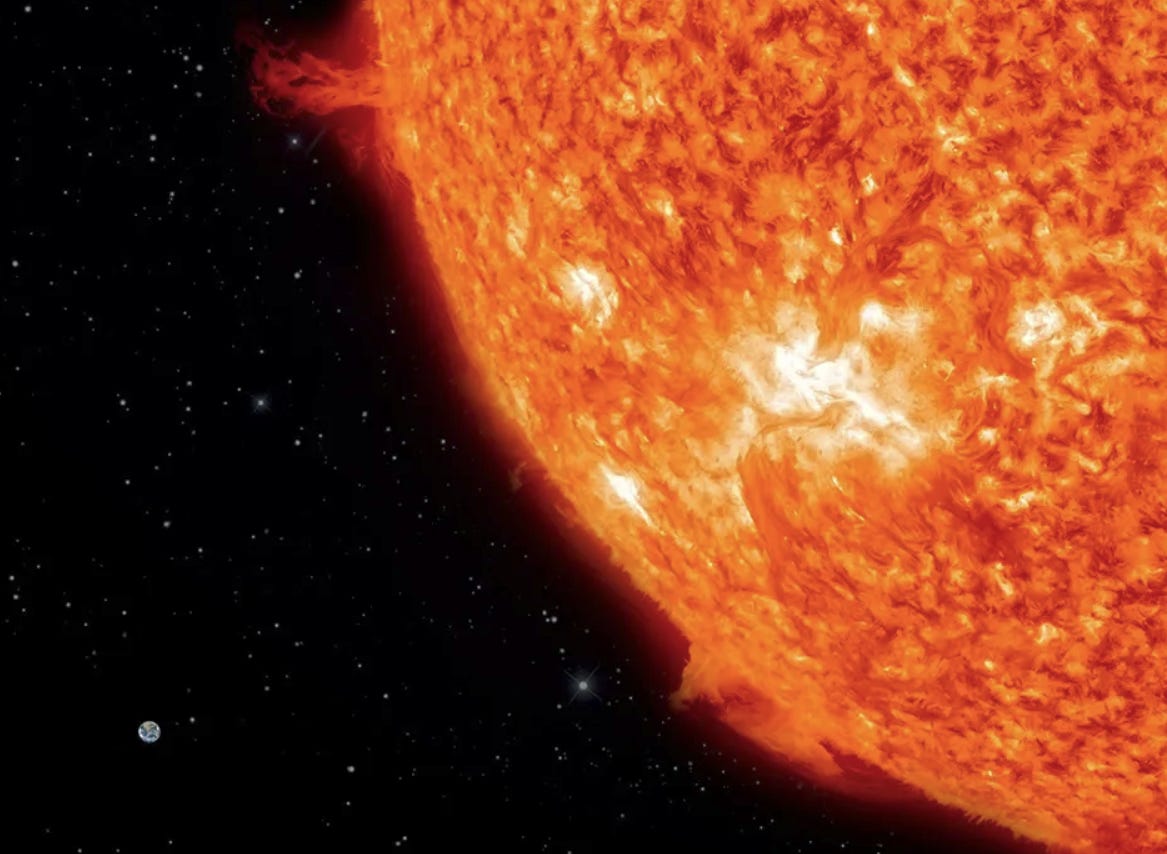
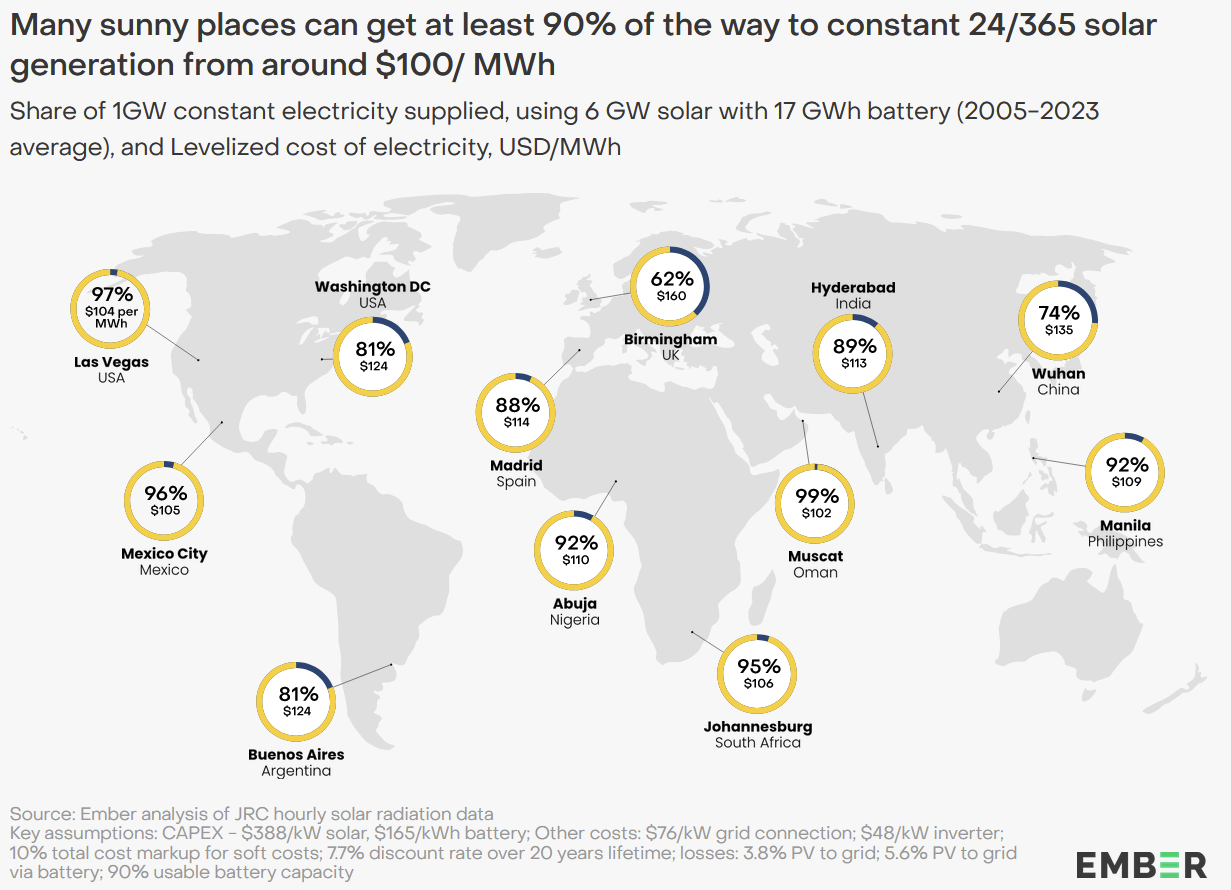
Solar solves energy because it’s generating electricity by tapping directly into a billions-of-years-old nuclear reactor 93 million miles away that is so utterly immensely gigantic it makes Earth look like a pool ball by comparison. It’s been the cheapest source of electricity on the planet and the overwhelming majority of all new-built electricity-generating capacity worldwide for five years straight now, and it’s just getting started.
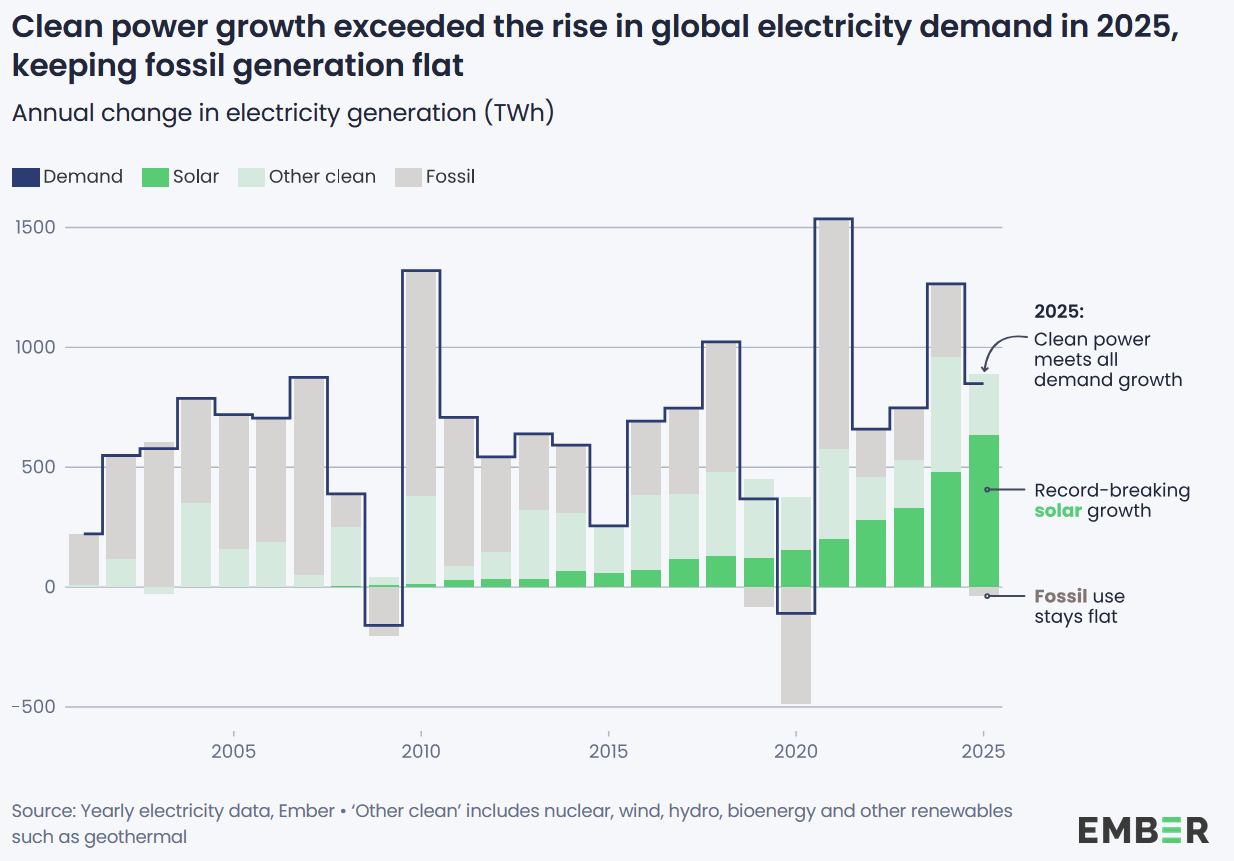
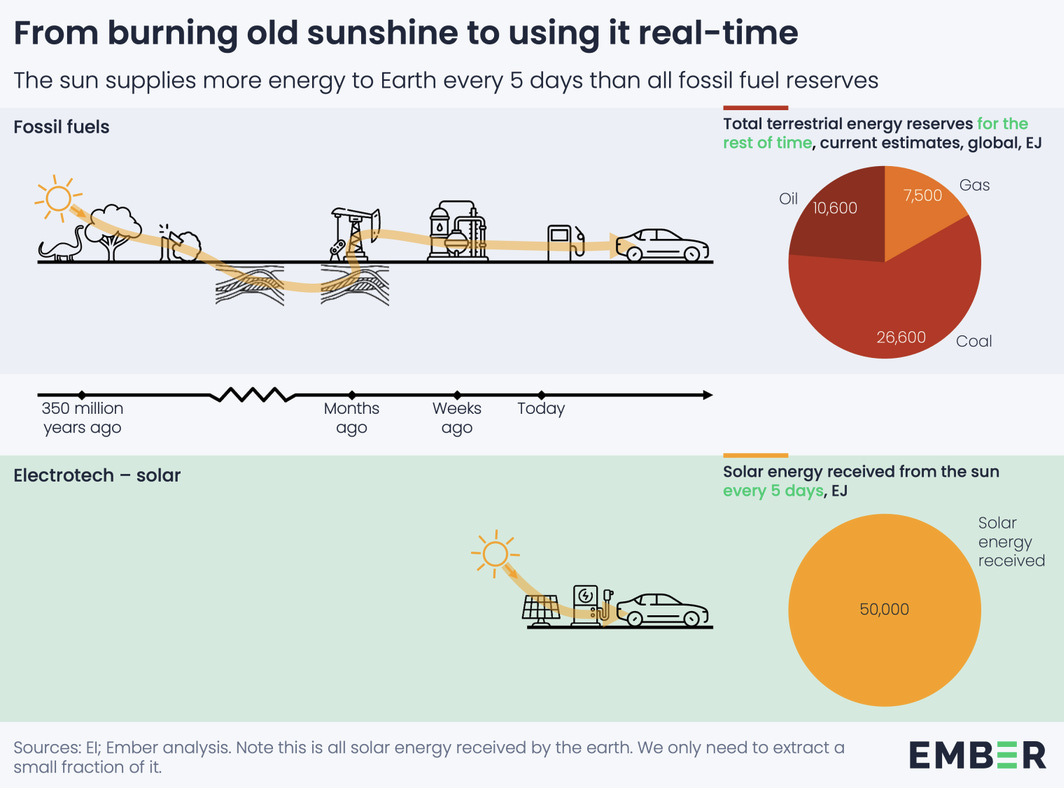
I sometimes think that we forget too easily what this technology actually is, and just what an incredible new foundational accomplishment it is for human civilization. Solar panels are simultaneously a humble, friendly, low-impact, zero-pollution power system suitable for your balcony or backyard and a personal conduit to unfathomable cosmic power1. There’s just so much energy produced by our Sun! Even the fraction of a fraction of a fraction of this star’s energy output that reaches the surface of Earth as sunlight adds up every five days to more usable energy than burning the world’s entire known fossil fuel reserves!
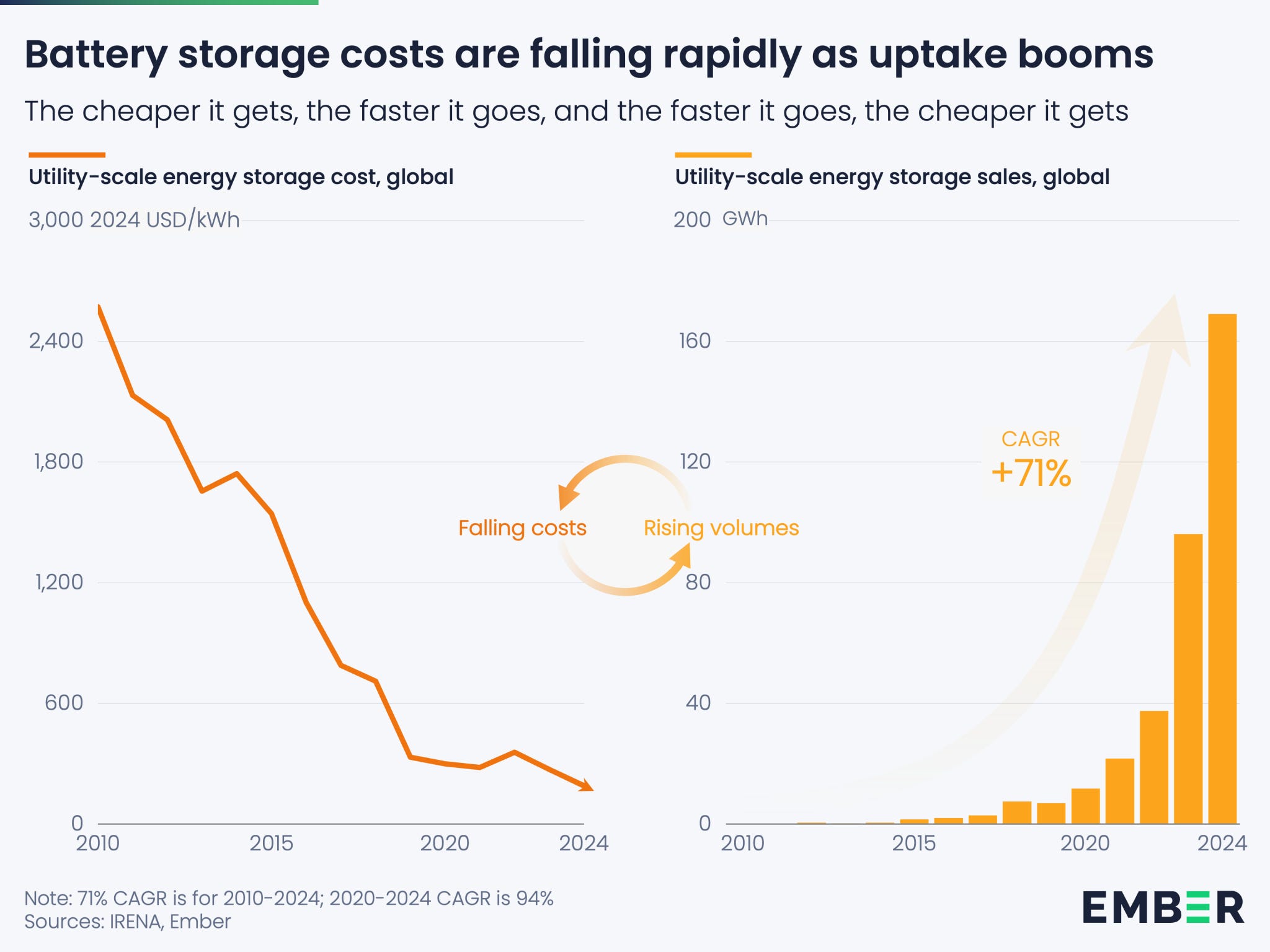
And then there’s BATTERIES! Solar’s best friend, the parallel revolution, the electricity silos, arbitraging electrons across time, extending the sun’s rays into the night, bringing solar asymptotically close to becoming its own source of 24/7 baseload power as the tech keeps progressing! This kills the intermittency problem stone dead and solidifies solar’s status as the new foundational power source for human civilization.
More available energy makes pretty much anything we humans want to do substantially easier. And so far at least, it’s been strongly associated with improved outcomes in key human-wildlife statistics like life expectancy, literacy, and women’s rights. More energy availability may sound greedy or wasteful, but in practice it disproportionately benefits the most vulnerable among us, the people most likely to be forced into dirty and dangerous muscle-power tasks from smoky cookstoves to back-breaking water-carrying.
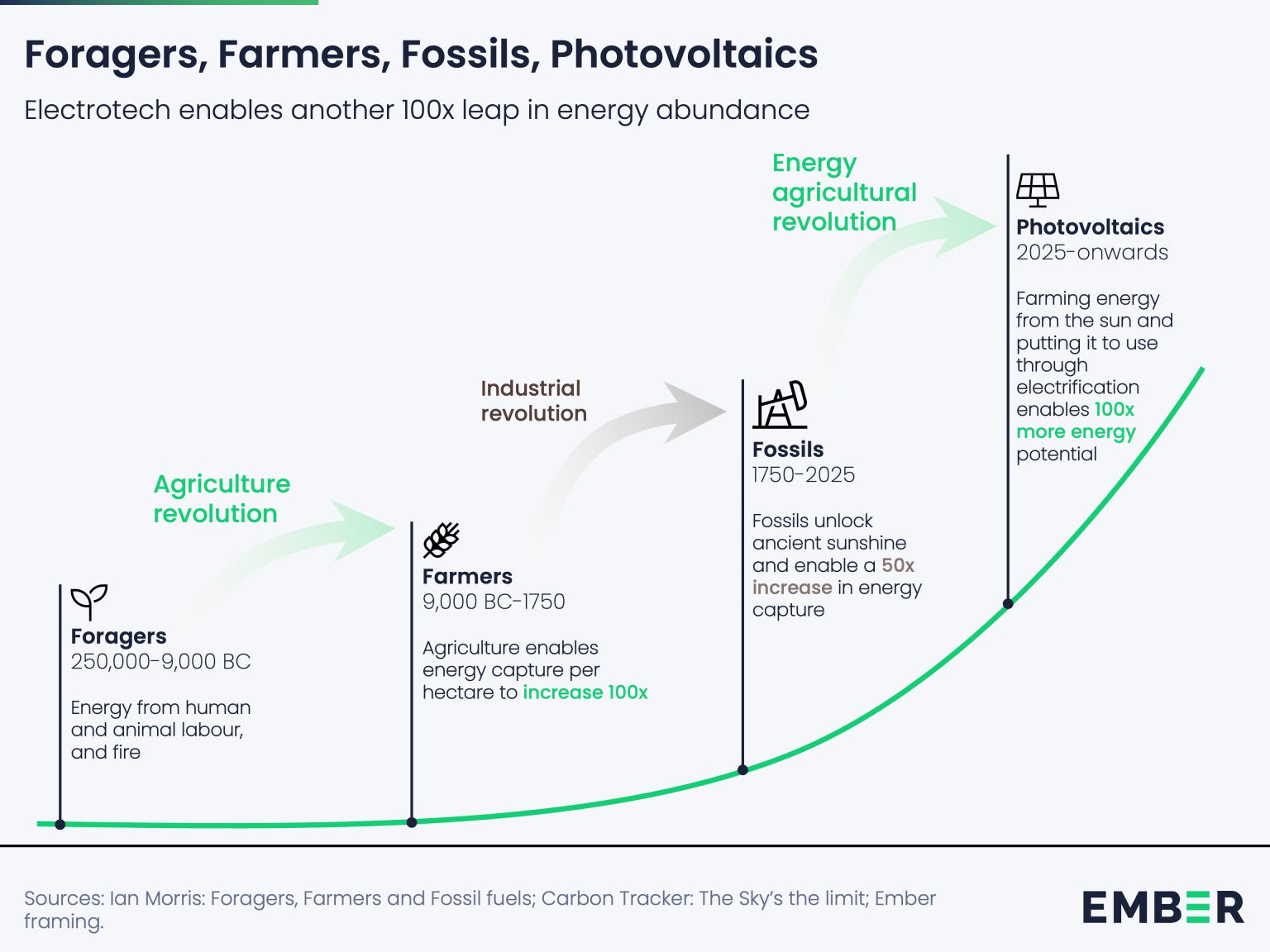
The Electrotech Revolution is the third titanic changing-everything phase-shift of human history, after the Agricultural Revolution and the Industrial Revolution. As Ember2 consistently discusses, human history in the long run may conveniently be periodized in four stages of increasing access to usable energy. Foragers, Farmers, Fossils…and now Photovoltaics.
We are beginning to truly channel the power of our local Star, and it is a momentous step forward in the history of humanity. In my opinion, this is both the best and most important thing happening on Earth right now. It’s bigger than the energy sector, bigger than the much-hyped AI industry, definitely bigger than politics. The Big Good to fight the Big Bad of climate change, potentially in the very long term of more lasting importance than the threat of climate change itself. The Solar/Battery Revolution will touch every aspect of human life, and signs are good that it will solve or at least drastically ameliorate a heck of a lot of our civilization’s biggest problems!
Solar Solves Water
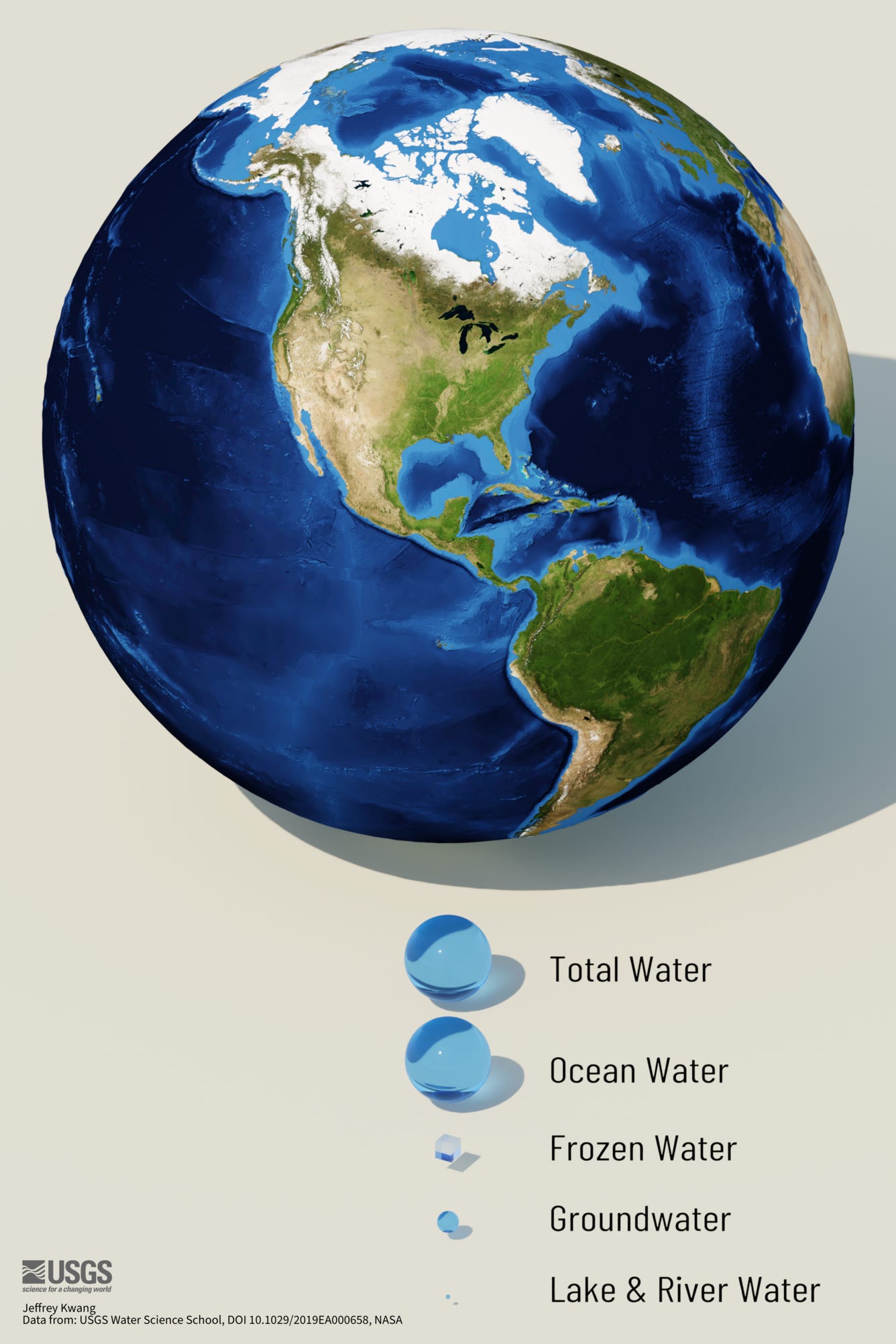
Solar solves water through desalination. (Not even getting into the incremental benefits of improved solar-powered wells and taps, which I’m categorizing under “energy”)! An overwhelming majority of the water on the surface of planet Earth is salt water in the oceans, most of the remainder is frozen in ice caps and glaciers, and only a relative trickle is available as liquid fresh water. Desalination works, but cheap, abundant solar power (plus the new materials science in membranes for osmosis techniques) is making it much, much cheaper. If humanity can tap the water reserves of the oceans, we need never, ever run out of water to drink. Water shortages anywhere in the world become a policy failure, not an external constraint.
And a good thing too, because climate change is threatening the reliability of surface fresh water. In dry areas of the world from Australia to the Middle East to southern California, desalination plants are being built at a rapid pace, slaking the thirsts of entire cities and providing some stability in an age of extreme weather shifts. We’re already seeing examples of rapid desalination progress and fascinating new paradigms from around the world!
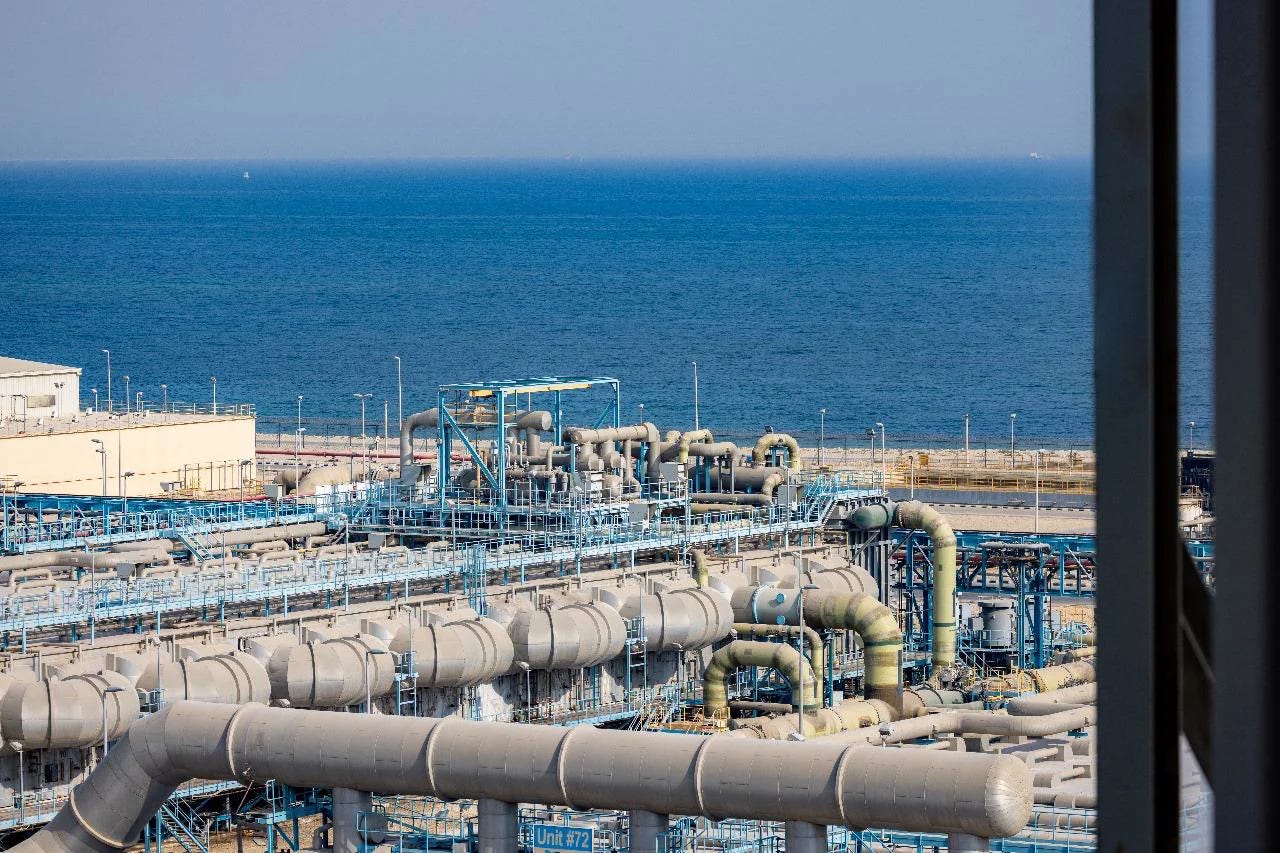
Saudi Arabia recently achieved a new world record for ultra-energy-efficient desalination, getting fresh water from seawater with less energy use than ever before. Their new cutting-edge advanced reverse osmosis unit at the Yanbu desalination complex (partially solar powered!) has a capacity of 200,000 cubic meters of water per day, and record-low energy use of 1.55 kwH per cubic meter.
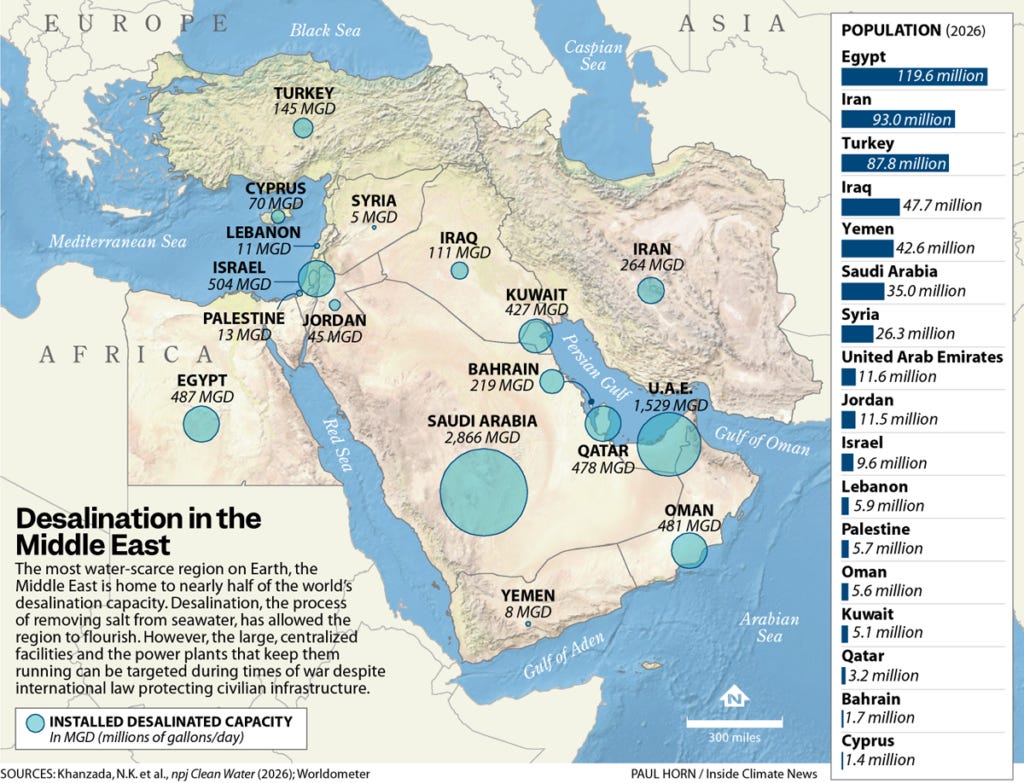
The Middle East already relies heavily on desalination to remain habitable, and this paradigm is likely to accelerate.
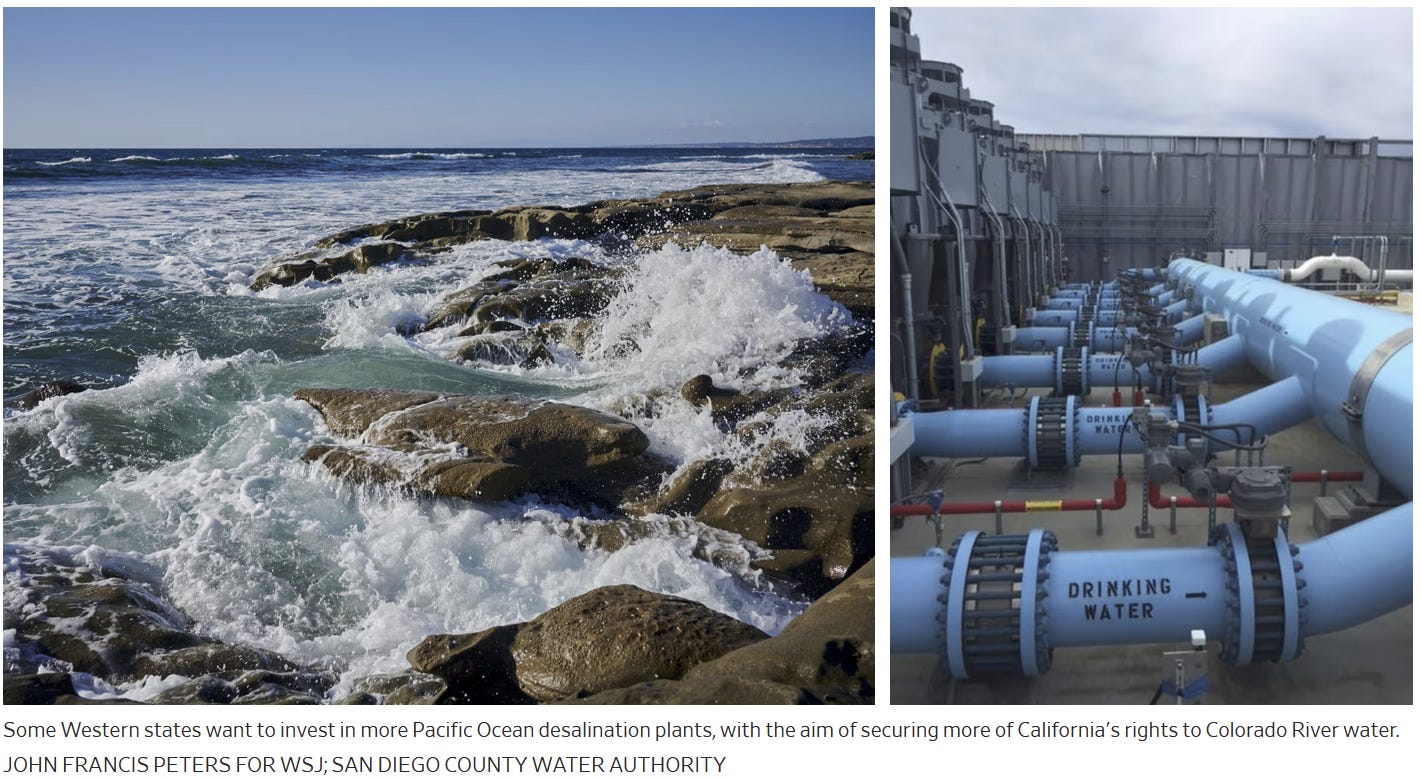
San Diego, California, once a water-stressed city, has become an indirect water exporter due to the excellent performance of its new Carlsbad desalination plant, online since 2015 and the largest in North America. As the Colorado River grows drier, the states of Arizona and Nevada (and reportedly soon Utah as well) are now in talks to fund more California desalination and water recycling projects in exchange for some Californian river water rights. The American West drought is getting some innovative solutions!
Desalination is expanding. In 2026, two companies and two county governments in Texas have signed off on a new partnership to build a gigantic new advanced-reverse-osmosis desalination plant on South Padre Island with a capacity of at least 50 million gallons per day. This could potentially “drought-proof” the entire Rio Grande Valley region (currently severely water-stressed to the point of risking draining the river!) by providing a consistent supply of drinkable water from the Gulf of Mexico!
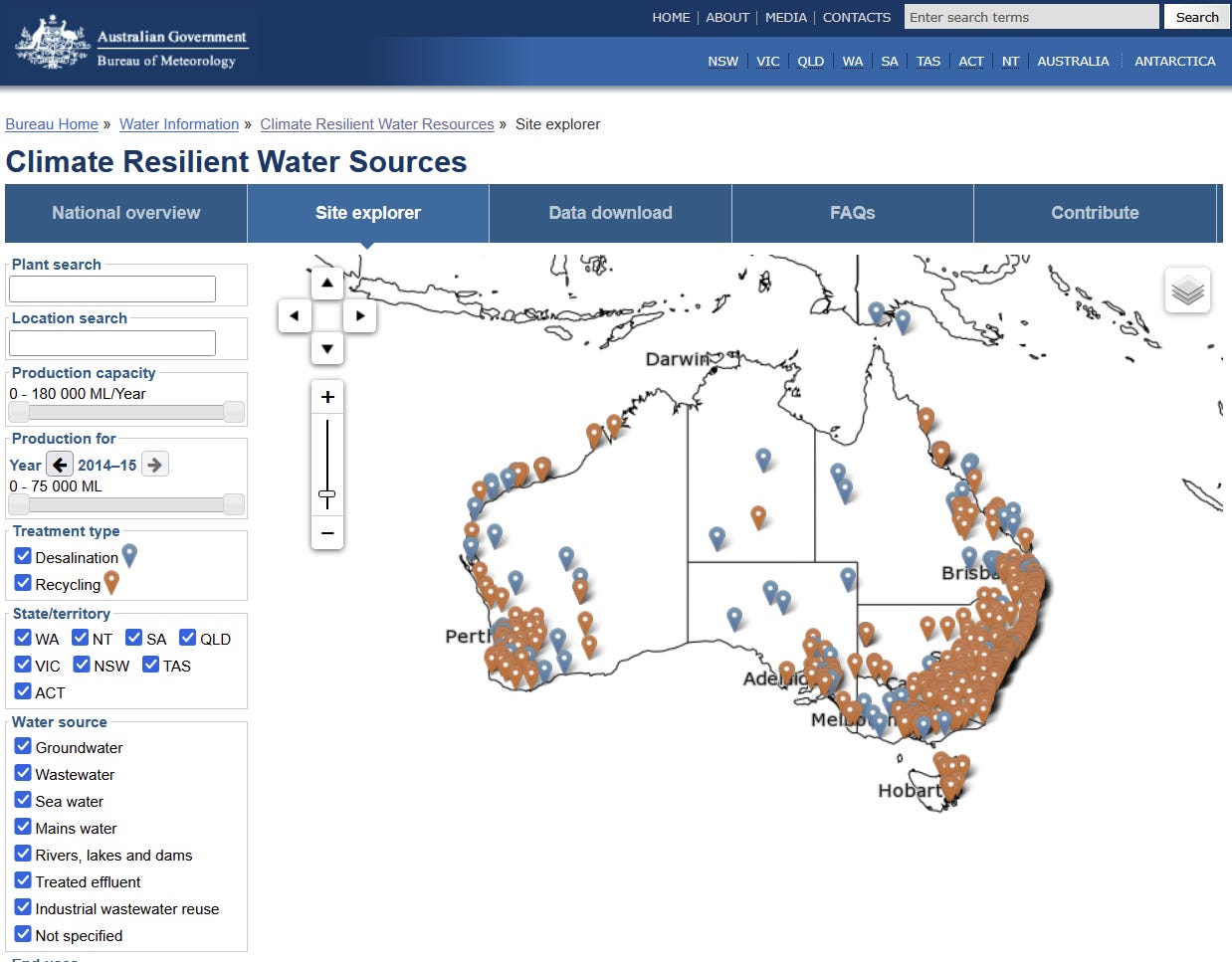
In Australia, there are already major desalination projects providing much of the water supply to the cities of Perth, Adelaide, Melbourne, Sydney, and the Gold Coast region of Queensland. More and more are under construction.
Desalination’s negative environmental impacts are on track to be greatly reduced, if not eliminated entirely. There are a great multitude of pioneers fine-tuning upgraded models of desalination that minimize negative effects on marine life, for example diffusing brine discharge over a harmlessly broad area or using the salt and minerals in industrial applications. And when you look at the global picture, the seas of Earth are getting more full of water and slightly less salty anyway as the Greenland ice cap melts, so removing a little fresh water (at a much, much smaller scale) is just moving the needle very slightly back towards pre-Anthropocene conditions.
Desalination is increasingly a core civilizational competency, slaking cities’ thirsts in a warming world. As desalination is overwhelmingly likely to keep scaling up fast, there’s fascinating potential for substantial knock-on effects to benefit biodiversity by humans reducing consumption of the surface fresh water we share with wild ecosystems – or even, in the future, using desalination to produce more fresh water to keep drying lakes, rivers, and swamps alive on a hotter planet.
Solar Solves Food
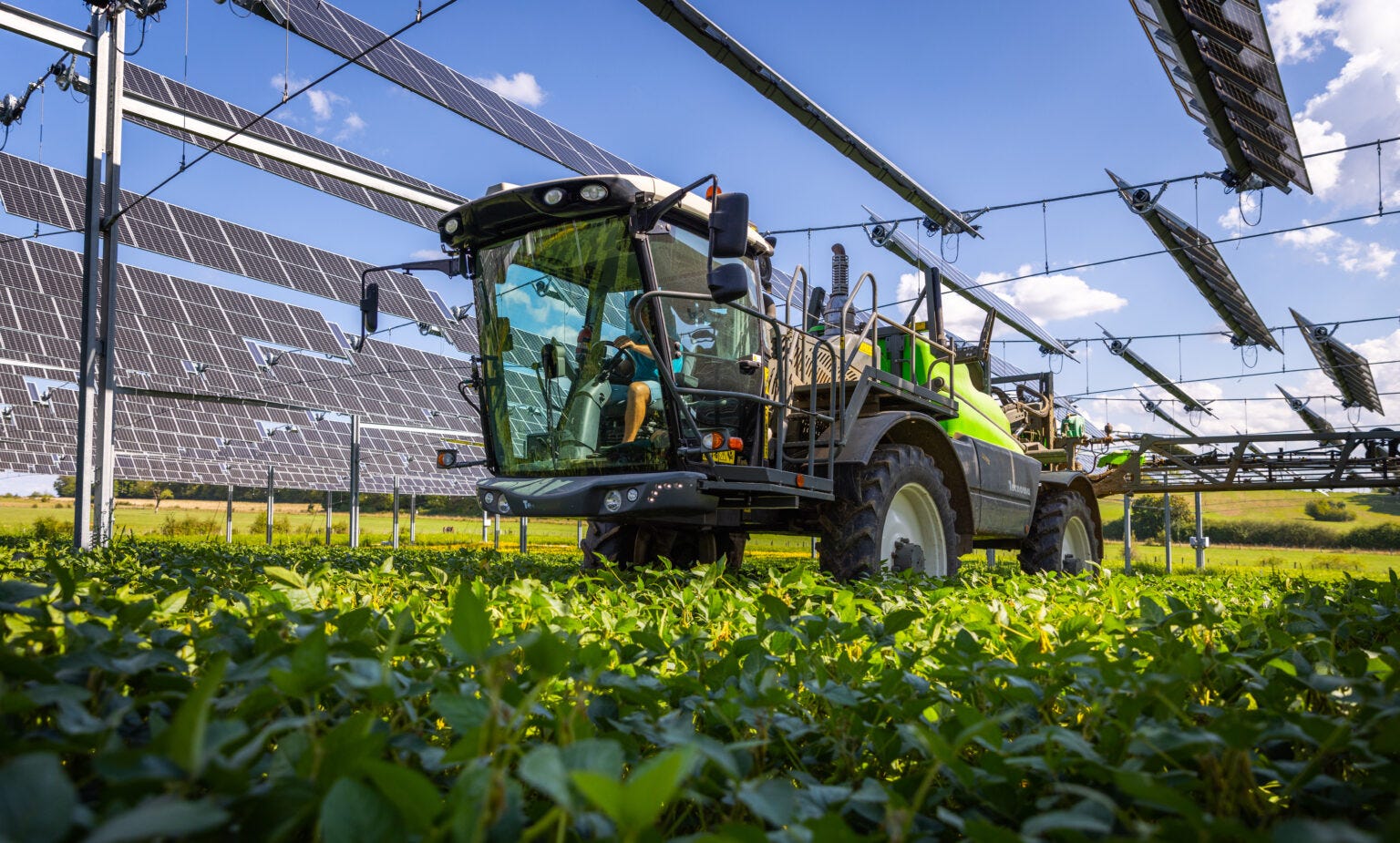
Solar solves food through agrivoltaics, soon to be joined by scaled-up cellular agriculture! And that’s not even counting the many second-order factors related to energy electrotech just being better in general, like the emerging worldwide surge of electric farm equipment and irrigation wells reducing dependence on vulnerable diesel imports!
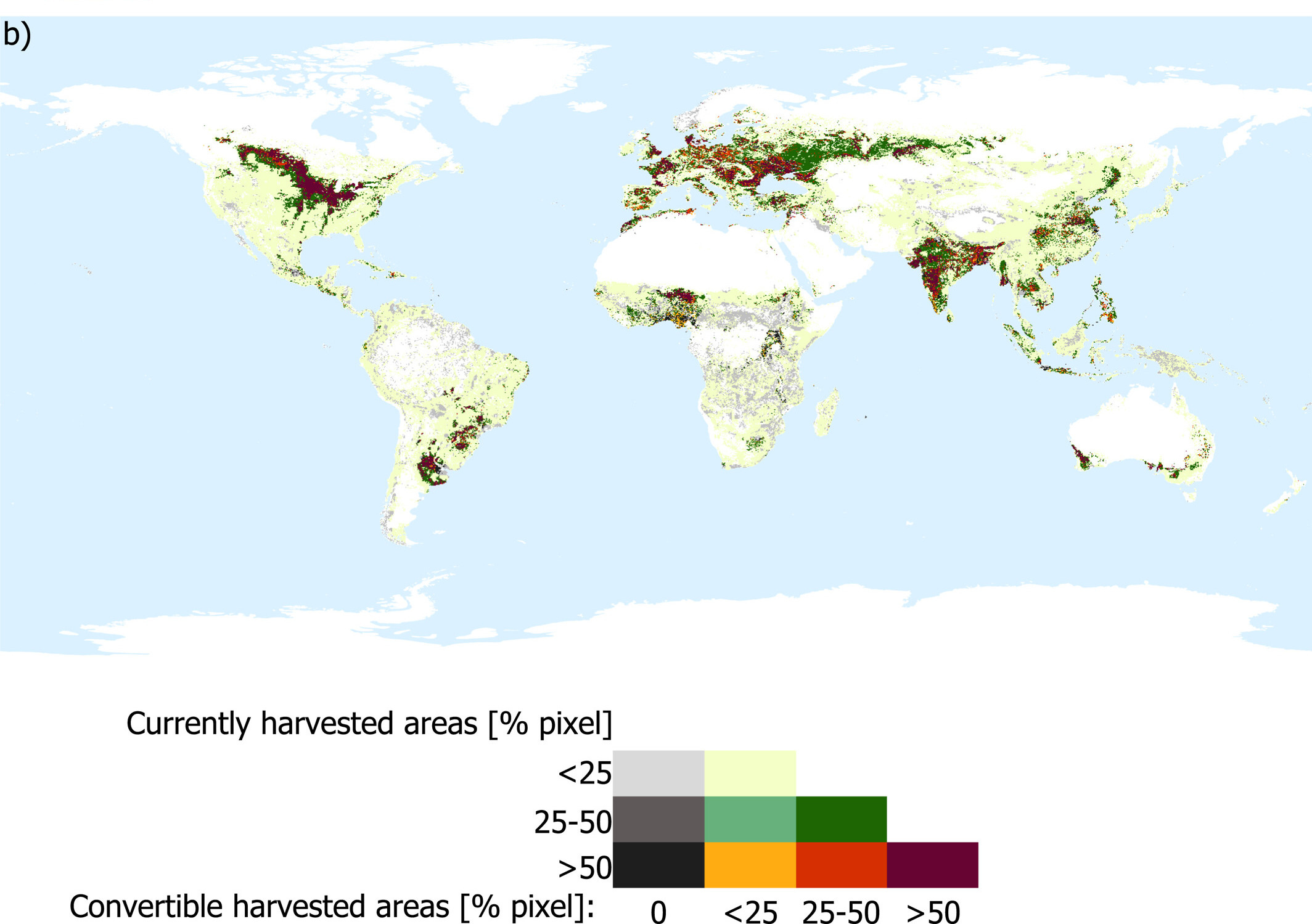
A landmark new study from 2025 has calculated that agrivoltaics, the growing of crops under solar panels, is suitable for a very large chunk of all existing farmland across Earth’s surface. Their headline result is that about 22% to 35% of rain-fed harvested area globally would likely continue their current crop yields if solar panels were added, with the agrivoltaic setup helping to reduce water stress by protecting the crops from heat! And I wouldn’t be surprised if that’s a conservative estimate by now, because new studies on crops performing well under solar shading just keep pouring in from around the world. I could write an entire weekly newsletter on agrivoltaics alone and never run out of stories.
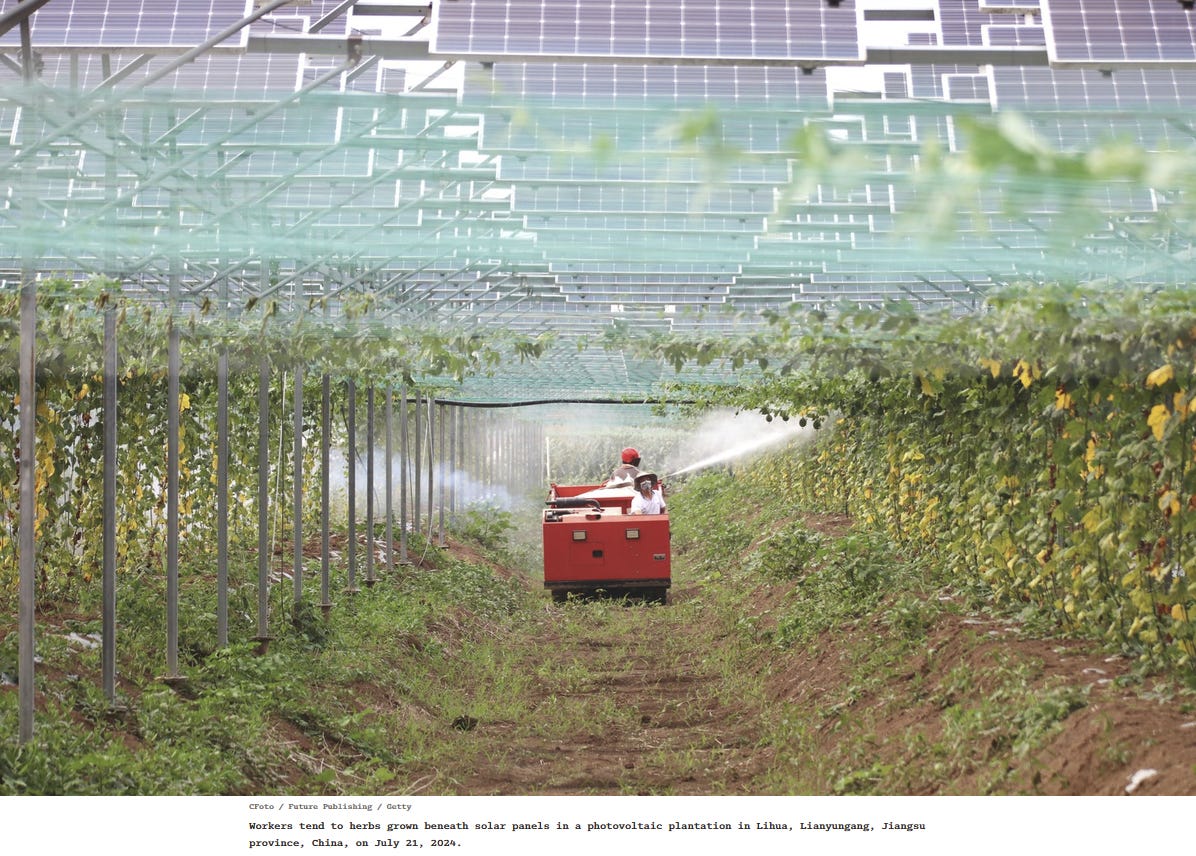
As with much else, China is ahead of the curve on this. China had over 500 agrivoltaics projects two years ago in 2024, and many more have been built since. Solar panels have been installed over sites ranging from livestock grazing areas in Inner Mongolia to tea plantations in Yunnan to leafy vegetable-growing greenhouses on the island of Hainan.
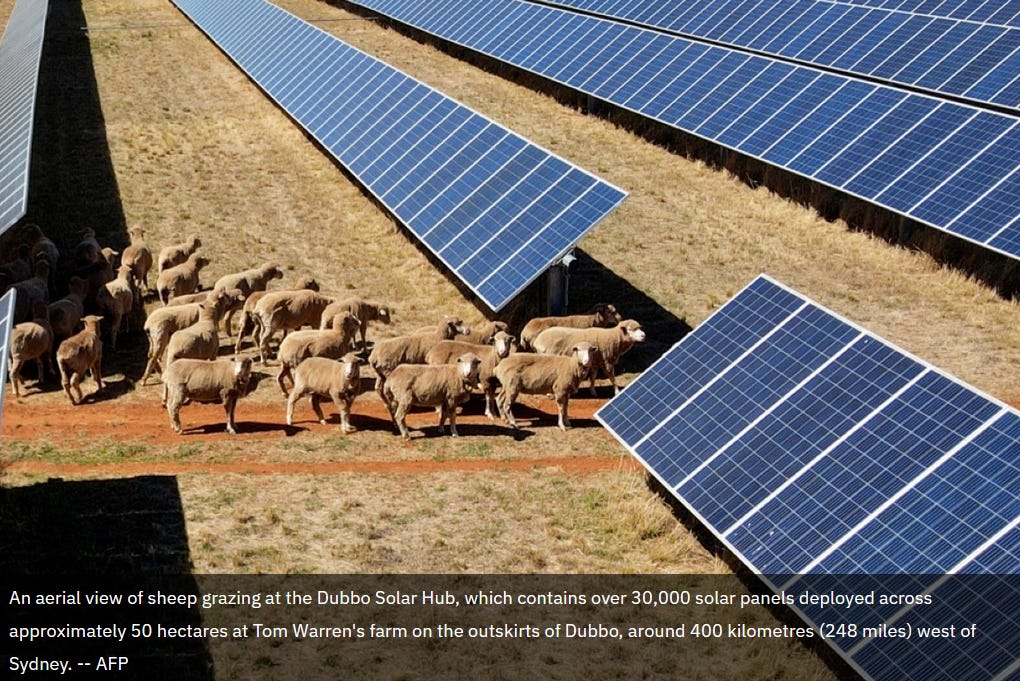
Shade and a windbreak - it helps keep moisture in the soil! With the rise of agrivoltaics, plus the incredibly fast rise of new precision-bred heat-tolerant higher-yielding climate-resilient crops around the world in recent years, I personally think that the long-feared apocalyptic of climate chaos-driven famines is no longer an inescapable trap, but entirely avoidable and overcome-able.
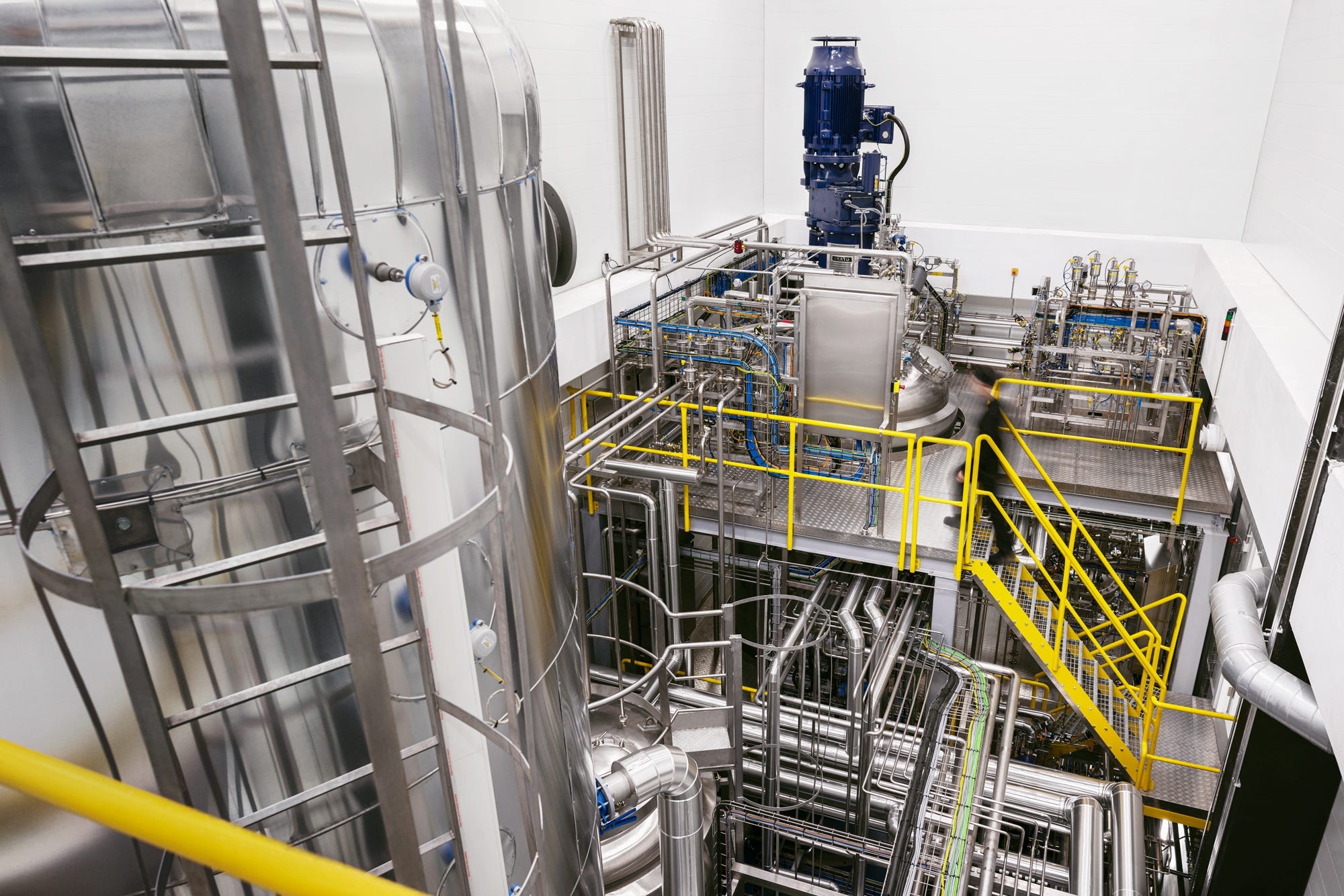
And that’s just the first wave of how solar directly benefits food production. We already have working prototype factories in Finland doing commercially viable cellular agriculture, growing and fermenting a particular species of microbe (in a setup similar to how beer is brewed) with only renewable electricity and carbon dioxide needed as inputs, to produce human-edible Solein protein powder! It’s now scaling up fast, with the second (much larger) factory being built.

Precision-fermented protein is the most sustainable food in the history of the world. It is to plants what plants are to beef, using much less water and land while causing much lower greenhouse gas emissions.
It’s completely independent of weather or soil conditions, a mass protein production strategy suitable for a Mars base — or a global network of climate disaster-proof backups on Earth, potentially up to the task of ending hunger forever.
This very year, 2026, saw a protein powder enriched with Solein, the first calorie source in human history not sourced directly or indirectly from photosynthesis, go on sale in the United States for the first time. There are dozens more products being developed for sale in markets around the world.
The Solein-making Finnish startup’s name? Solar Foods. It’s only just beginning to scale up, and there are many more in the field. Watch this space!
Solar Solves Health

The first way solar power solves health is by replacing the fossil fuels that are the world’s leading source of deadly air pollution. A Harvard T.H. Chan study has calculated that 8 million people per year die earlier due to air pollution from fossil fuels. That means that burning fossil fuels directly hastens one in five human deaths worldwide! The population of New York City killed by fossil fuels, every year. That’s not even discussing carbon dioxide-related impacts, just all the nasty crap that burning coal, oil, and gas spews into the atmosphere, from sulfur dioxide to particulate matter. Fossil fuel air pollution is a major cause of heart disease and lung cancer (two of the biggest causes of death for modern humans) as well as asthma, chronic obstructive pulmonary disease, and a host of other ailments.

All unnecessary. We have a better choice. The change is already happening. When I went to Beijing in January 2026, I saw clear blue skies. Hundreds of thousands of Chinese people are alive today who would have been dead if their country hadn’t pushed so hard to cut fossil fuel pollution and deploy renewables. The U.S. and Europe had already made substantial progress on air pollution reduction by the dawn of the solar age, but there’s still lots of opportunity to improve — for example by switching to EVs and shutting down those last coal and gas plants!

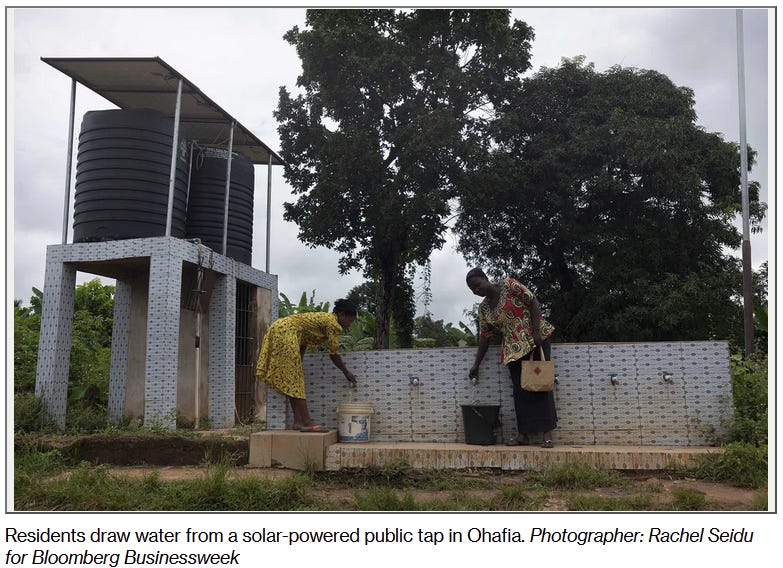
The second way solar power solves health is through its fundamentally decentralized and resilient nature, a massive boon for healthcare accessibility that is particularly apparent in the vital cold chain. A lot of life-saving medical products, from vaccines to blood transfusions, need to be kept cold in fridges right up until their use. In underdeveloped tropical parts of the world, like sub-Saharan Africa, communities without a stable 24/7 grid connection (many millions of people) essentially had no chance at getting the basic healthcare the rich world takes for granted, because there was no way that their tiny village clinic (if they even had one!) could consistently keep a fridge running without any blackouts spoiling the supplies.
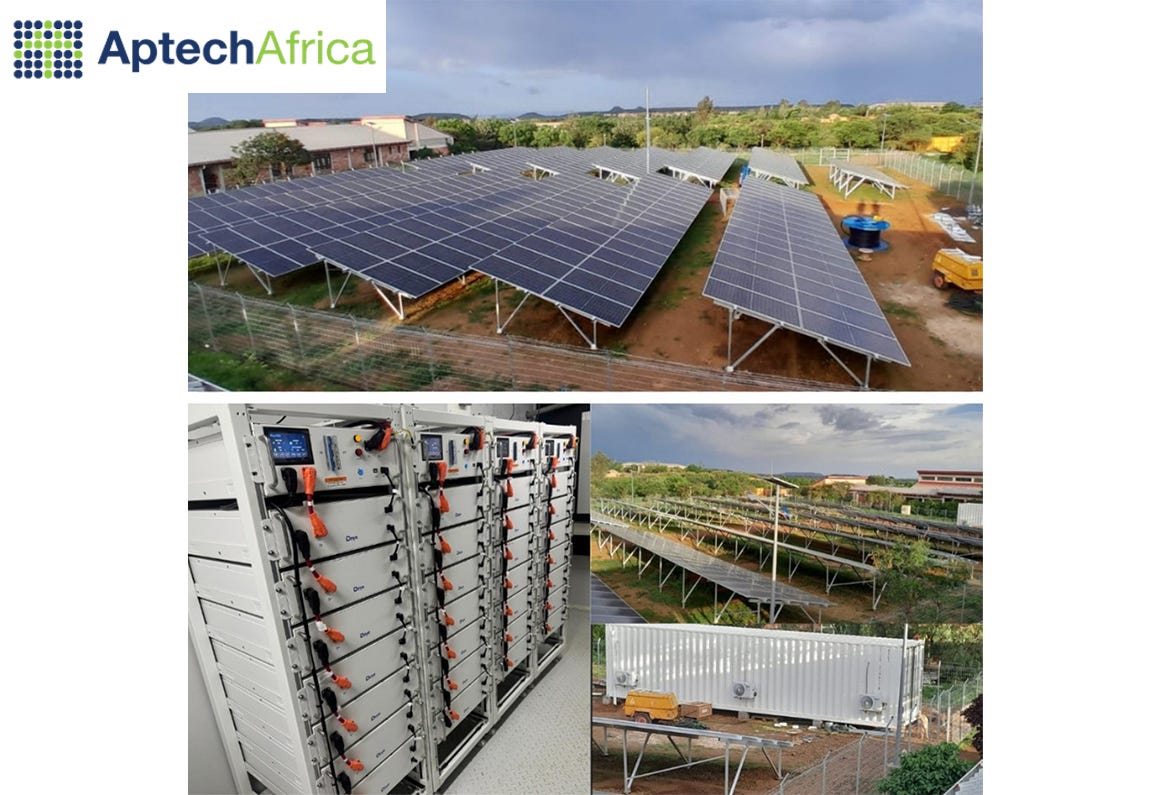
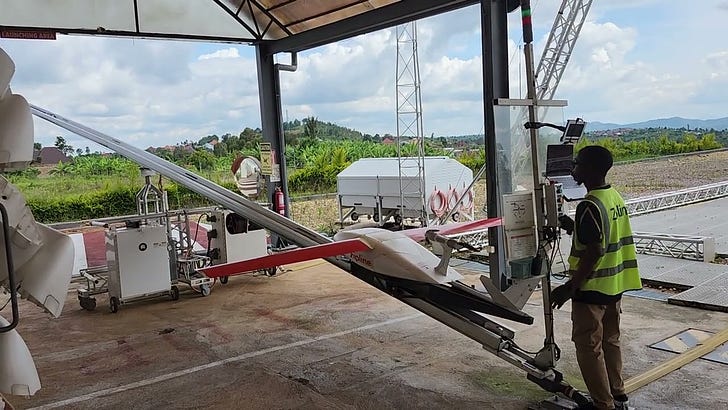
That’s now changing fast thanks to the solar revolution! And there are entire new paradigms of healthcare now possible due to electrotech, like Rwanda’s amazing medical drone delivery base that I visited in April 2026. That’s possible thanks to batteries, and solar is making it ever cheaper and easier to charge those batteries! The life-saving benefits of modern medicine are rapidly becoming available to the world’s poorest people, thanks to solar power.
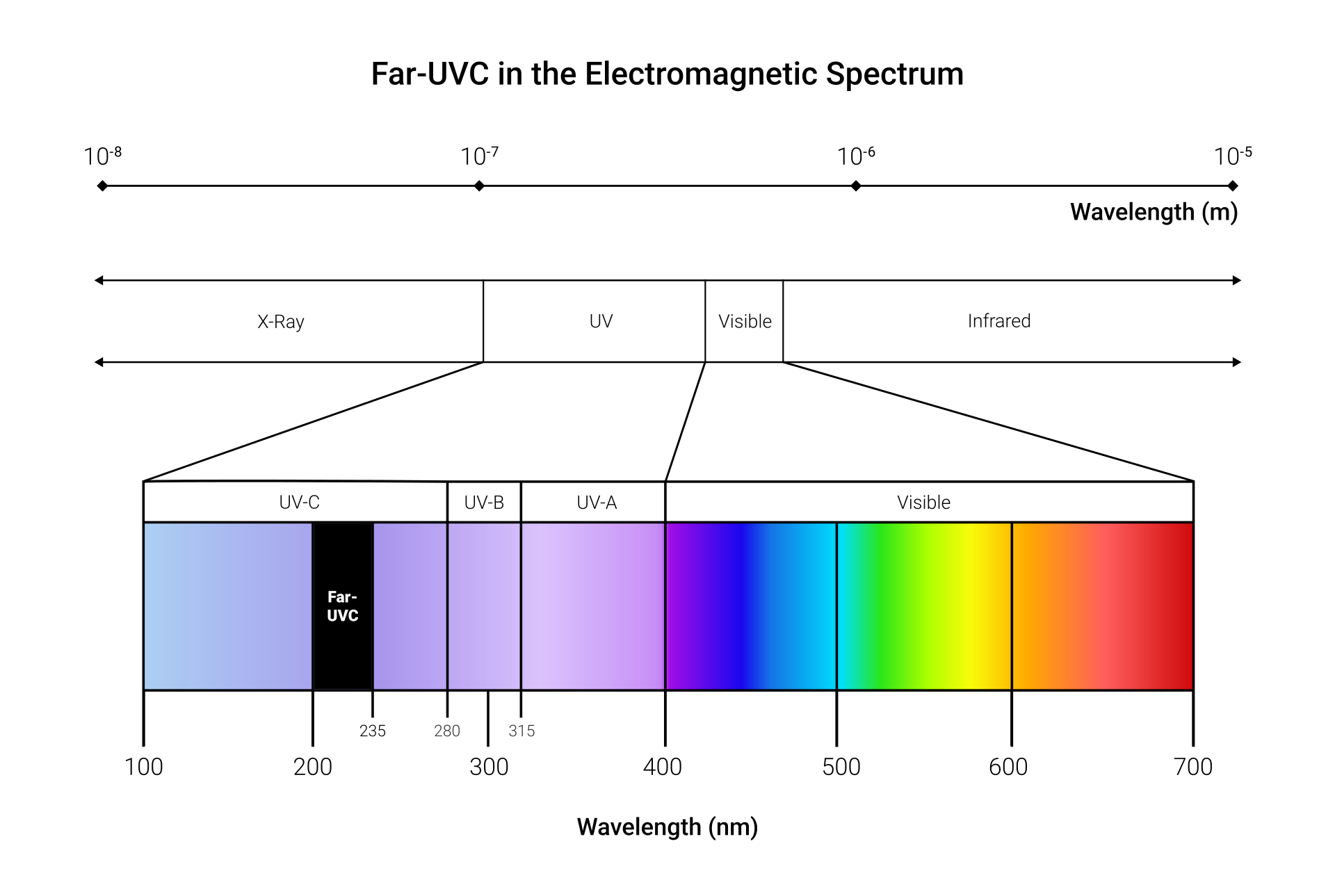
But wait, that’s not all! As with cellular agriculture for food, there are also some fascinating early signs of a potential extra additional future solar-powered revolution in the field of health. Scientists have recently found that a very specific wavelength of far-UVC light, around 200 to 235 nanometers, kills lots of bacteria and viruses while having little to no negative impact on human health — not even the sunburn you get from the UVB part of the UV spectrum. If you install a specialized lamp producing far-UVC light, it basically constantly disinfects everything the light touches.
We probably still want to minimize exposure, but even a few walk-through light booths at the entrance to key infection-transmission areas like hospitals, schools, and public transport stations could revolutionize public health, maybe even to the level of preventing the next pandemic or ending transmission of the common cold if it gets widespread enough. That’s the kind of widespread additional beneficial electricity use that would be relatively to easy to implement in a solar-powered civilization!

Solar Solves Biodiversity Loss
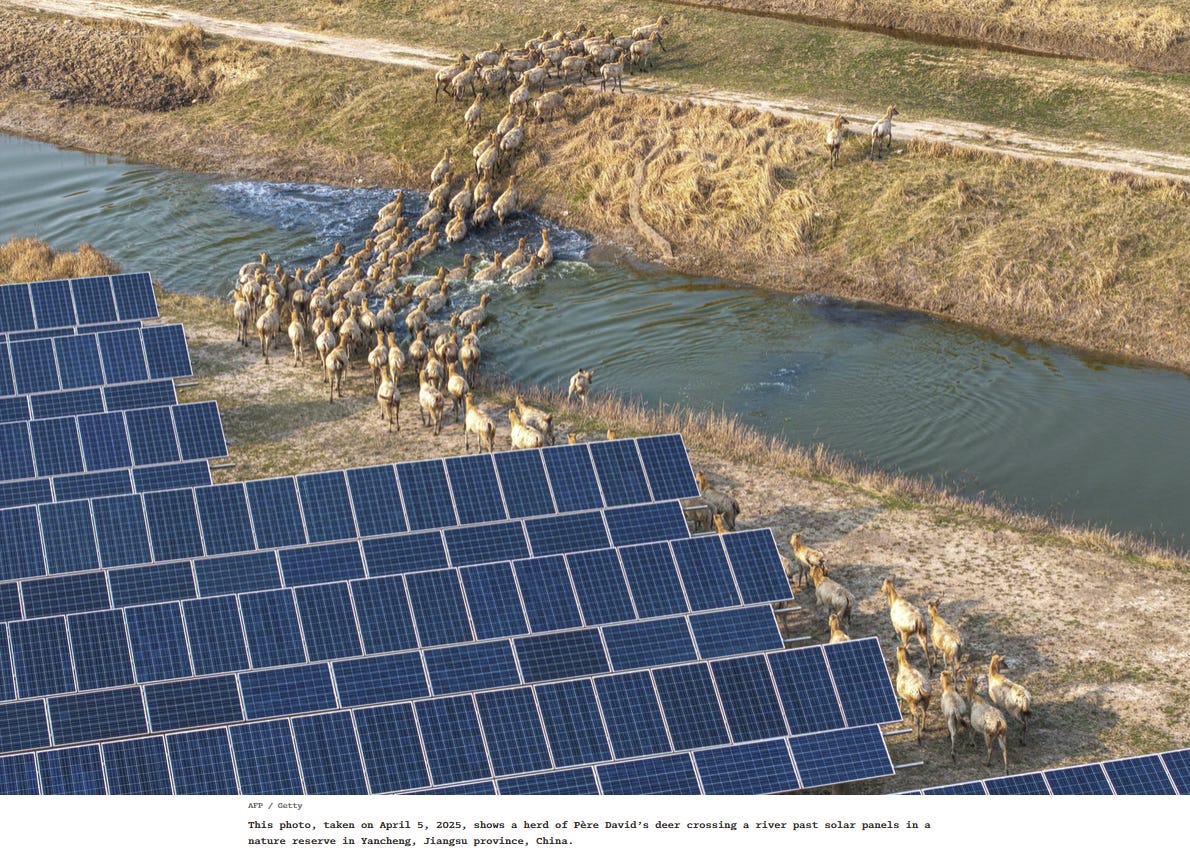
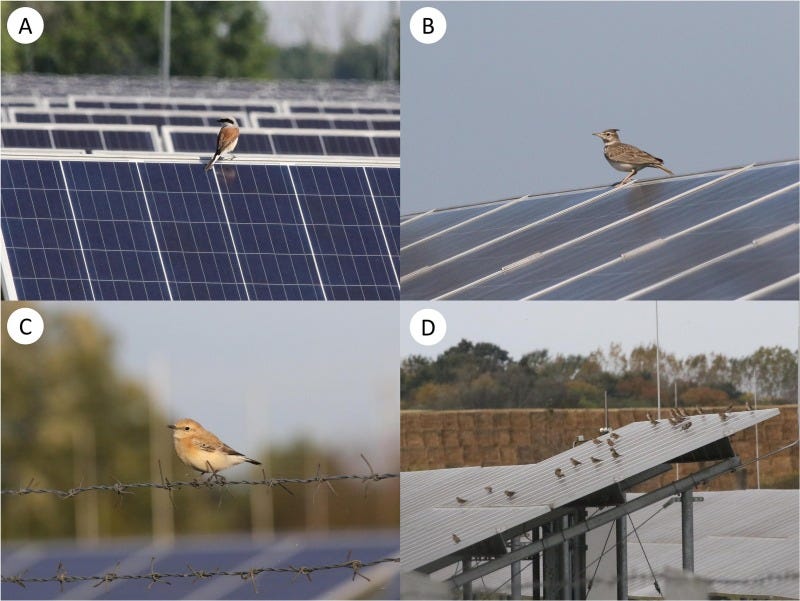
Solar solves biodiversity loss because it is a highly economically productive land use that is eminently compatible with wildlife habitation. A solar panel is, after all, just a thing, sitting there, like a Platonic solid. Photons knocking electrons off silicon. No moving parts, no emissions, no pollution going out to soil, water, or air. Over and over, studies around the world are finding that many wildlife species simply don’t mind solar panels, and if the land under and around them is sown with wildflowers or just left alone it can become prime bird and small mammal habitat, as studies have found recently from the UK to the U.S. Midwest!
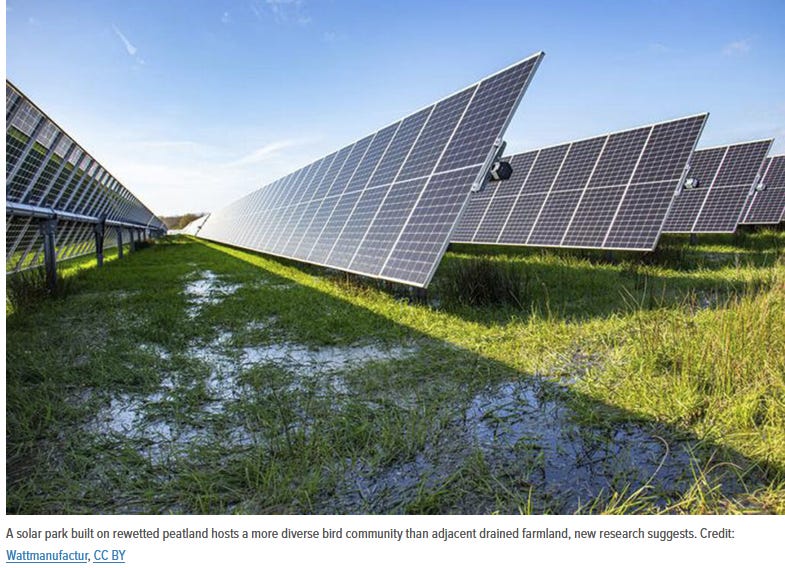
Solar farms are immensely better for wildlife than high-intensity industrial cropland pretty much everywhere. Study after study keeps finding more biodiversity on solar farms than on the adjacent farmland! Replacing crop growing with solar farms (which currently take up less space than golf courses and much less space than wasteful ethanol cropland in America today!) is a huge benefit to wildlife. It provides classic grassland habitat in exactly the way that modern high-intensity farming doesn’t. There’s no more plowing or pesticides! It’s a de-facto nature sanctuary that pays for itself.
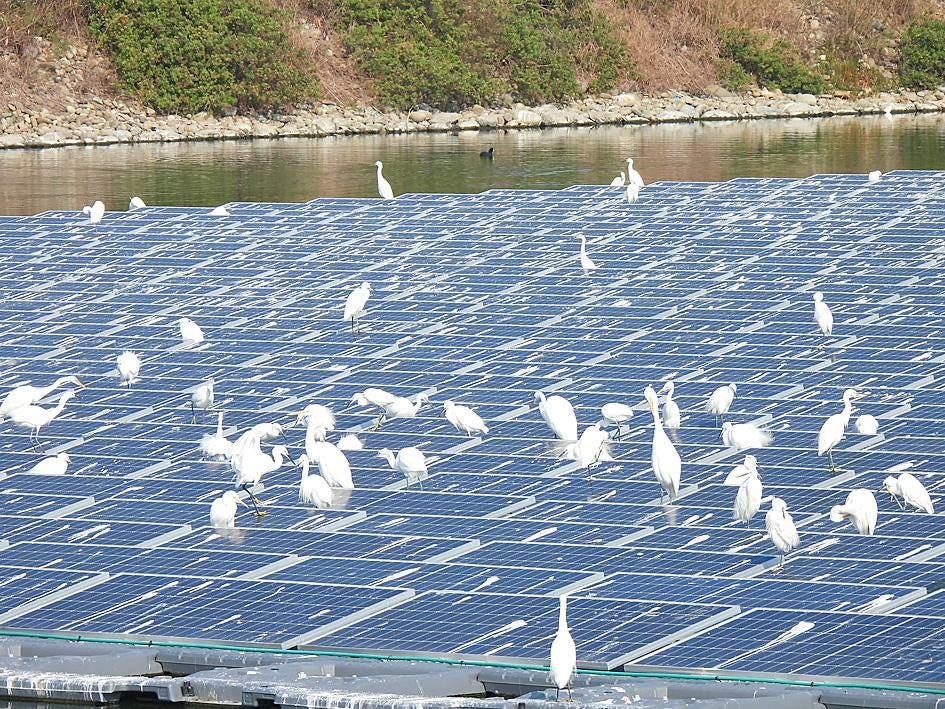
These benefits aren’t just on land. The fast-growing field of floating solar, in addition to conserving water by reducing evaporation, often becomes a new perching ground for waterbirds!
Furthermore, in deserts and dry grasslands, we’re increasingly learning that adding solar panels actively benefits the wild ecosystem!
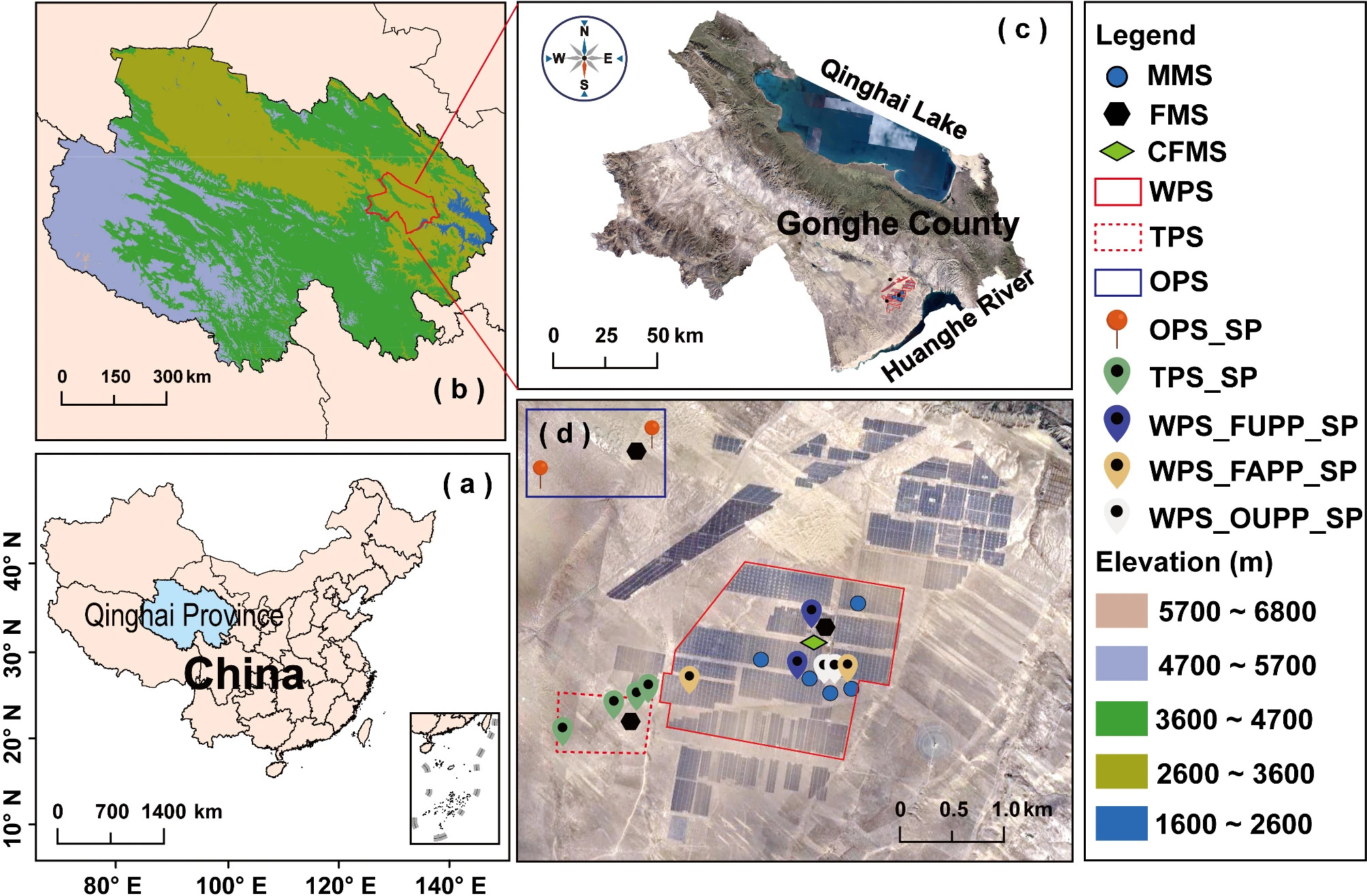
An in-depth new study at the giant 1 GW (1,000 MW) Gonghe solar park in Qinghai Province, China, has found that the presence of solar panels had multifaceted positive effects on the local arid desert ecosystem. The solar panels provide shade and a windbreak, allowing more moisture to accumulate in the soil below, and the researchers found that the area under the solar panels had higher plant diversity, plant biomass, and microbial diversity than the surrounding desert!
“Photovoltaic development has primarily induced positive effects on the region’s microclimate, physical and chemical properties of the soil, and diversity of the plant and microbial communities, as supported by recent findings.”
-Wu et al. 2024, Nature Scientific Reports
As solar farms spread, we’re seeing similar findings around the world. A recent study from Arizona State University has found that the cool shade of solar panels can serve as a growth-enhancing “nursery” for small American desert plants and “biocrust” species like mosses, lichen and cyanobacteria.
It’s starting to look like building large-scale solar farms in arid deserts is not, in fact, an ecological tradeoff - it’s a win-win! Shade and a windbreak, again, doing their thing! It’s a way of generating energy that is SIMULTANEOUSLY A FORM OF CLIMATE-RESILIENT ECOSYSTEM CONSERVATION! It’s the freaking apotheosis of the environmental movement, a self-sustaining incentive package to help the drier parts of Earth survive the Anthropocene.
Solar Solves Mining and Waste
Solar solves mining and waste because an electrotech economy lives more lightly on the Earth than a fossil fuel economy. Not only in the metaphorical way, preventing massive global harms like toxic air pollution, in the very literal pounds/kilograms way.
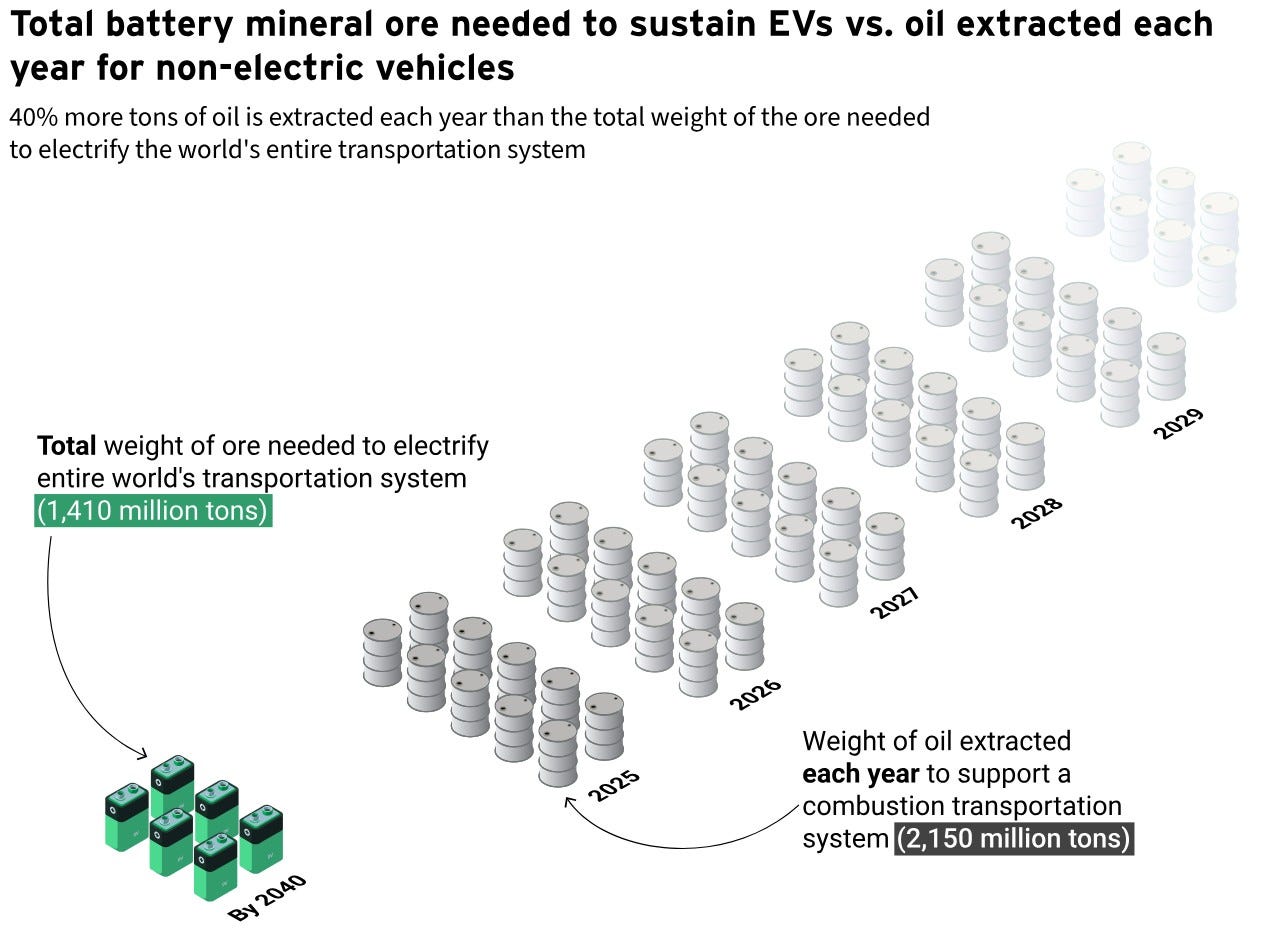
The total weight of the ore needed to electrify the entire world’s current transport system by 2040, all those critical battery minerals you hear about, all the lithium and manganese and rare earth elements, adds up to about 1.410 million tons. That’s a lot. But the weight of the oil extracted each year to support our current fossil-fueled transportation is about 2.150 million tons! This is just transport, but the same relationship holds for all of our civilization. It makes sense when you think about it - fossil fuels get burned, but solar panel and battery minerals stay in use for decades and can then be recycled!
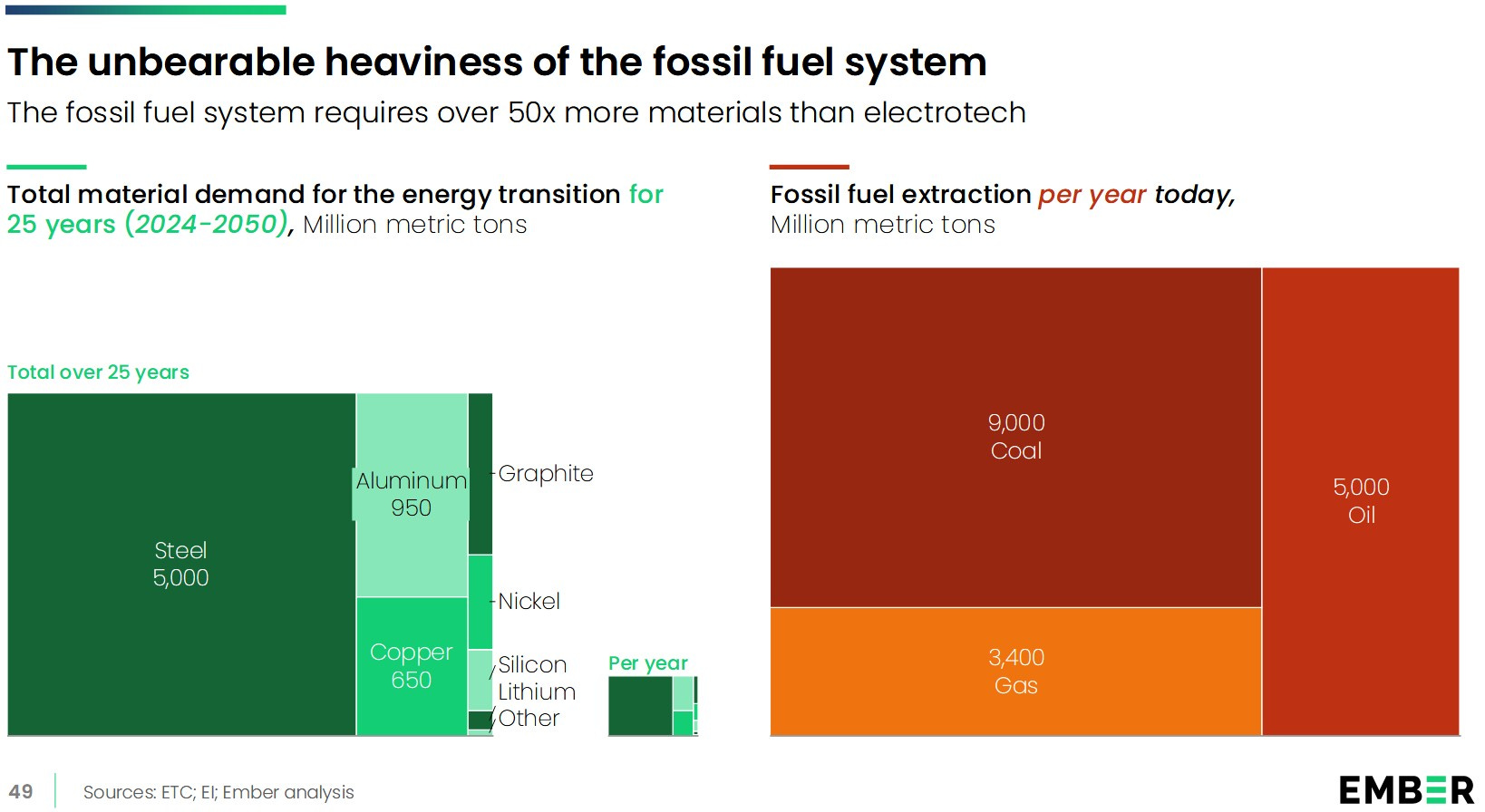
As highlighted in the exciting research of Dr. Hannah Ritchie and the Rocky Mountain Institute, we’re also learning that clean energy technologies hit a waste-reduction trifecta. In comparison to fossil fuels, they require orders of magnitude less mining (because they’re not burning fuel!), produce much less end-of-life waste, and are increasingly hyper-recyclable, to the extent that it might someday be possible to create a “Battery Mineral Loop,” where after a one-time mining investment, critical minerals could just keep getting recycled between ever-improving generations of tech.


I get why many people oppose battery mineral mines near them, I really do. And in some places, like Sulawesi in Indonesia, rapid proliferation has caused genuinely bad environmental harm. But in the global scheme of things, each battery mineral mine is also a sort of anti-mine, an investment in a civilizational future with much, much less mining needed.

And much less waste! Total “used solar panel” waste by 2050 is on track to add up to less than one percent as much mass than coal ash waste! End-of-life solar, wind, and battery waste is generally highly recyclable, and even if it wasn’t and was all destined for a landfill (implausible in the extreme), the fact that clean energy minerals stay in use for twenty years straight instead of being burned up for fuel means that their waste would still be positively tiny and harmless in comparison to the vast and constantly growing piles of toxic coal ash already sickening some of America’s and the world’s poorest and vulnerable communities!
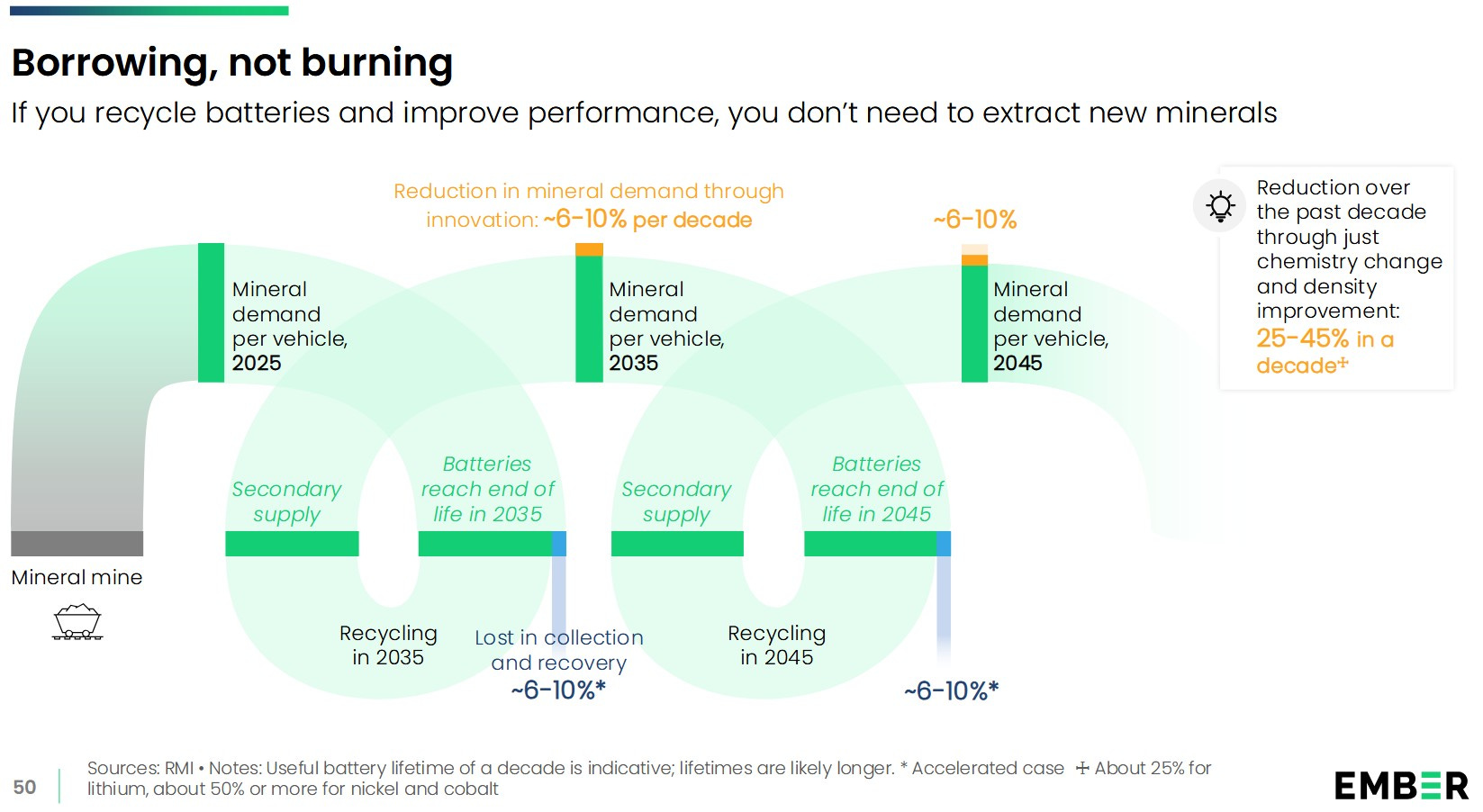
But what’s actually happening is even better — as we improve at both recycling and efficiency, building solar panels and batteries with less materials, the rate of improvement is so fast that after a few more decades, we might not even have to extract new minerals for batteries and other electrotech! This is frankly incredible.
Solar Solves Peace and Freedom
As Bill McKibben has consistently written, a solar-powered world seems extremely likely to be a more peaceful and freer one.
What do Russia, Iran, Saudi Arabia, and a multitude of smaller dictatorships from Brunei to Equatorial Guinea have in common? Their economies are propped up by fossil fuel exports, a narrow, capital-intensive, centralized source of money and power that can be easily controlled by autocrats and used to fund brutal regimes. (One might also note at this point the many, many extremist political factions in democracies that have been empowered by raking in fossil fuel industry donations, including the current White House regime). And in addition to being a ready-made recipe for enriching autocracies, the process of exporting and transporting those fossil fuels creates geopolitical risks at chokepoint straits, constantly occupies a substantial chunk of the world’s shipping, and has routinely become a primary cause of bloody wars for control of this precious loot. But sunlight isn’t loot-able or blockade-able! Once you buy electrotech, it keeps working off free fuel for twenty years or more!
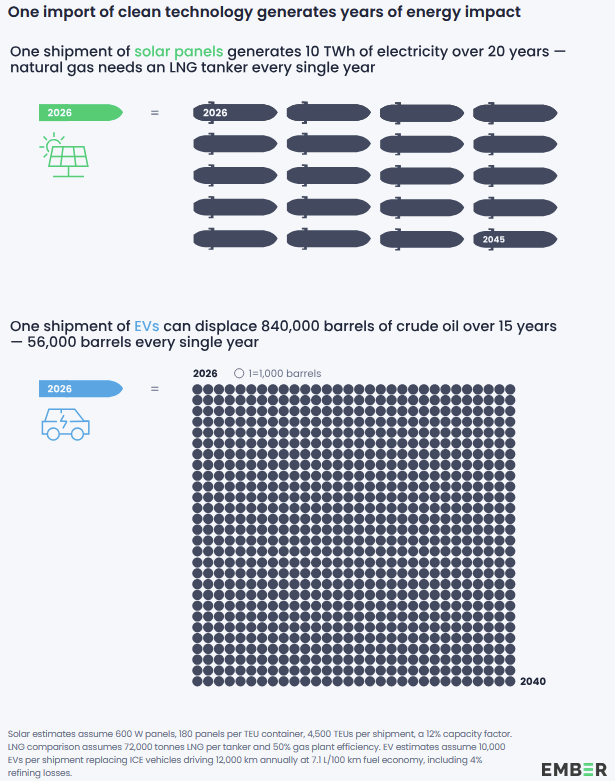
It is very difficult to set up a coal plant or oil refinery in your backyard or on your roof. But you can set up solar panels and battery storage anywhere, in any size, in any configuration, and then power your entire life with them, from an electric car to an induction cooktop. Whatever the worst threats to peace and freedom in the future may be - mass AI surveillance and cyberattacks, drone swarm attacks by terrorists or rogue states, climate-supercharged mega-storms, a nuclear exchange, bioengineered pandemics, something we can’t even conceive of yet – having widespread, decentralized solar and battery power will help people survive and resist it.
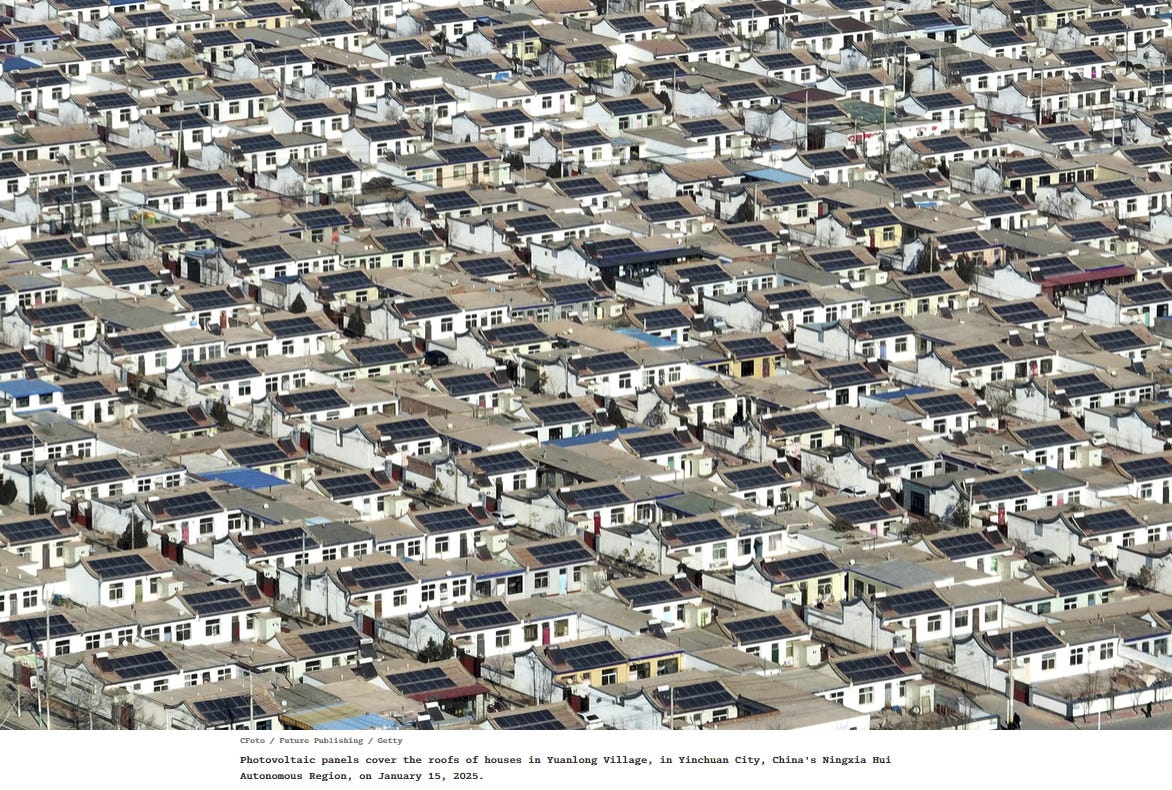
No matter what scary menace arrives in the future, it’s always going to be relatively easy to stop the operations of a single centralized coal or gas plant, with a single explosive strike or workplace infection or cooling water shortage. It will always be much, much harder to shut down electricity generation across tens of thousands of households with their own self-sufficient clean power plants. Even centralized grid-scale solar farms are much harder to destroy! As recent wars have proven, you can smash some panels, but the rest keep working and more can be installed quickly, unlike the complex, flammable fossil fuel plants where one boom kills the whole thing.
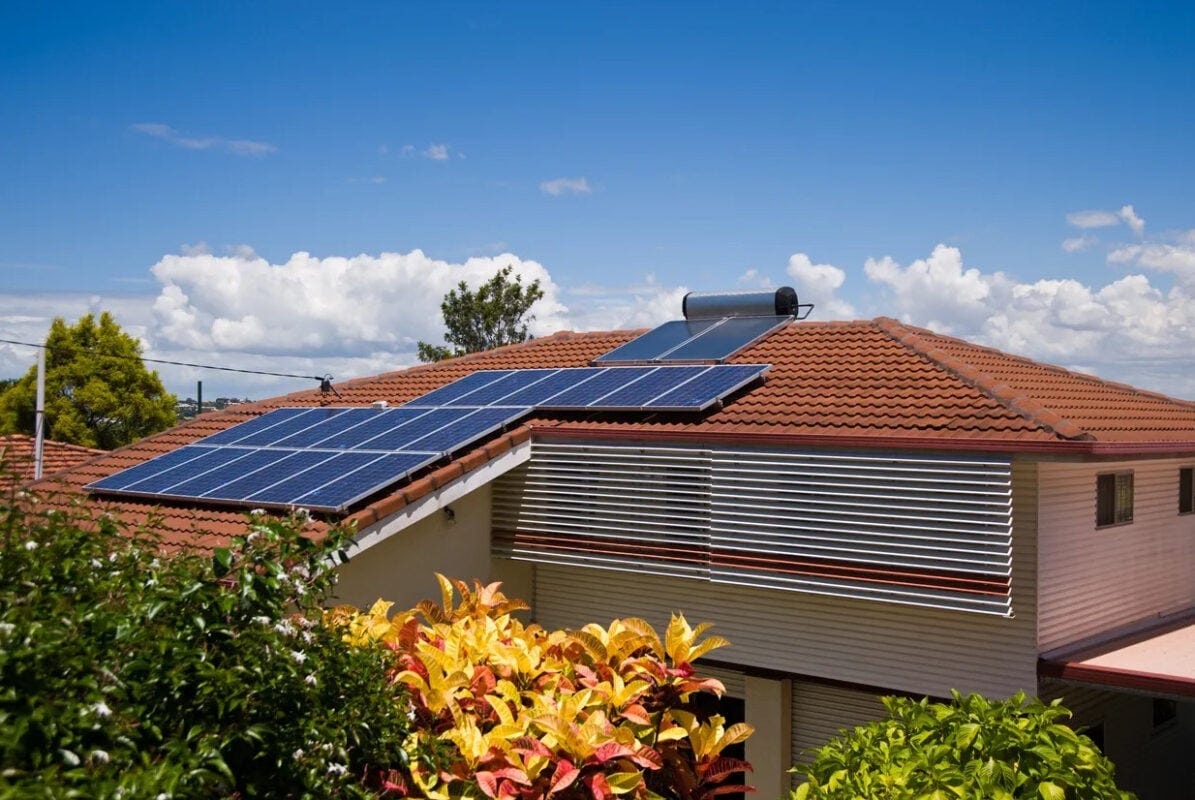
Decentralized solar fundamentally makes human civilization in its entirety a more resilient, less fragile entity, giving ordinary households the benefits of key modern technologies with an unprecedented degree of security and ownership over the power supply that makes those technologies function. We’re already seeing this, over and over, around the world, with solar creating islands of resilience after climate-supercharged mega-storms from Jamaica to Malawi.

Perhaps the most extreme test case so far is in Ukraine, where solar/battery microgrids are increasingly keeping hospitals and schools running despite constant brutal and deadly Russian missile attacks against civilians. A few recent solarization projects include the Odesa Perinatal Center (which saved 62 children’s lives in Jan-Mar 2026 alone!), a heart surgery center in Kropyvnytskyi, an eye surgery center in Mykolaiv, a maternity hospital in Cherkasy City, and the Borodianka Lyceum. Ukraine is at the forefront of building deep societal resilience with electrotech.
War and tyranny have obviously been around since long before humanity started to use fossil fuels at scale. Solar can’t solve the problems of senseless inter-ethnic hatred, bitter religious schisms, greed, stupidity, or sheer lust for power. But it can radically reshape the underlying architecture of civilization in a manner that surgically removes one of the primary enablers of, and incentives for, violence and tyranny today.
Solar Solves Climate Change
Oh, and solar power (plus batteries) also replaces almost all uses of the fossil fuel-burning technology producing the anthropogenic greenhouse gas emissions that are cooking the planet. Just in case we need another reason.
That sounds like some weird cult saying, but seriously, that’s what the technology actually does. It is your personal panel for getting usable power directly from the nearest star.
The one think tank that really gets it about all of this stuff.
It’s hard to imagine that you might have omitted another huge benefit of the electrotech revolution, so ably and enthusiastically summarized here. But if we move away from fossil fuel consumption for all the very good reasons you cite, advances in biochemistry also offer alternatives to the extremely hazardous proliferation of plastics - especially microplastics - that are increasingly present in our water, land, and bodies. The petrochemical molecule is not compatible with human health, and replacing it in all its forms with bio derived alternatives will yield astonishing gains in human health and well being - in rates of cancer, autism, COPD, and so many other modern scourges. Not to mention the pleasure we get from clear skies and waters! Thank you for chronicling the very hopeful pace of progress - keep it up! It is the essence of a new world view based not on the fear of scarcity but on the potential of abundance.
Your newsletter today is a balm that soothes my soul and fills me with hope for the future of my grandchildren.
I watched a video on social media about beavers that were introduced in Florida that restored wetlands that had been drained and destroyed by draining by agricultural use. Our fellow wise animals are helping us re- wild.