


Arthur Snell is a former British Foreign Office diplomat with field experience in Nigeria, Yemen, Iraq, and Afghanistan. More recently, he has been an independent geopolitical risk consultant, and has advised the government of Ukraine during the current war. He is the author of the new book Elemental: The New Geography of Climate Change and How We Survive It. He writes Not all doom on Substack at Arthur Snell.

In the interview below, this writer’s questions and comments are in bold, Mr. Snell’s words are in regular text, and extra clarification (links, etc) added after the interview are in bold italics or footnotes.
You’ve had a fascinating career around the world. This is obviously a bit too big of a question, but what do you think are some of the defining changes of the 21st century so far?
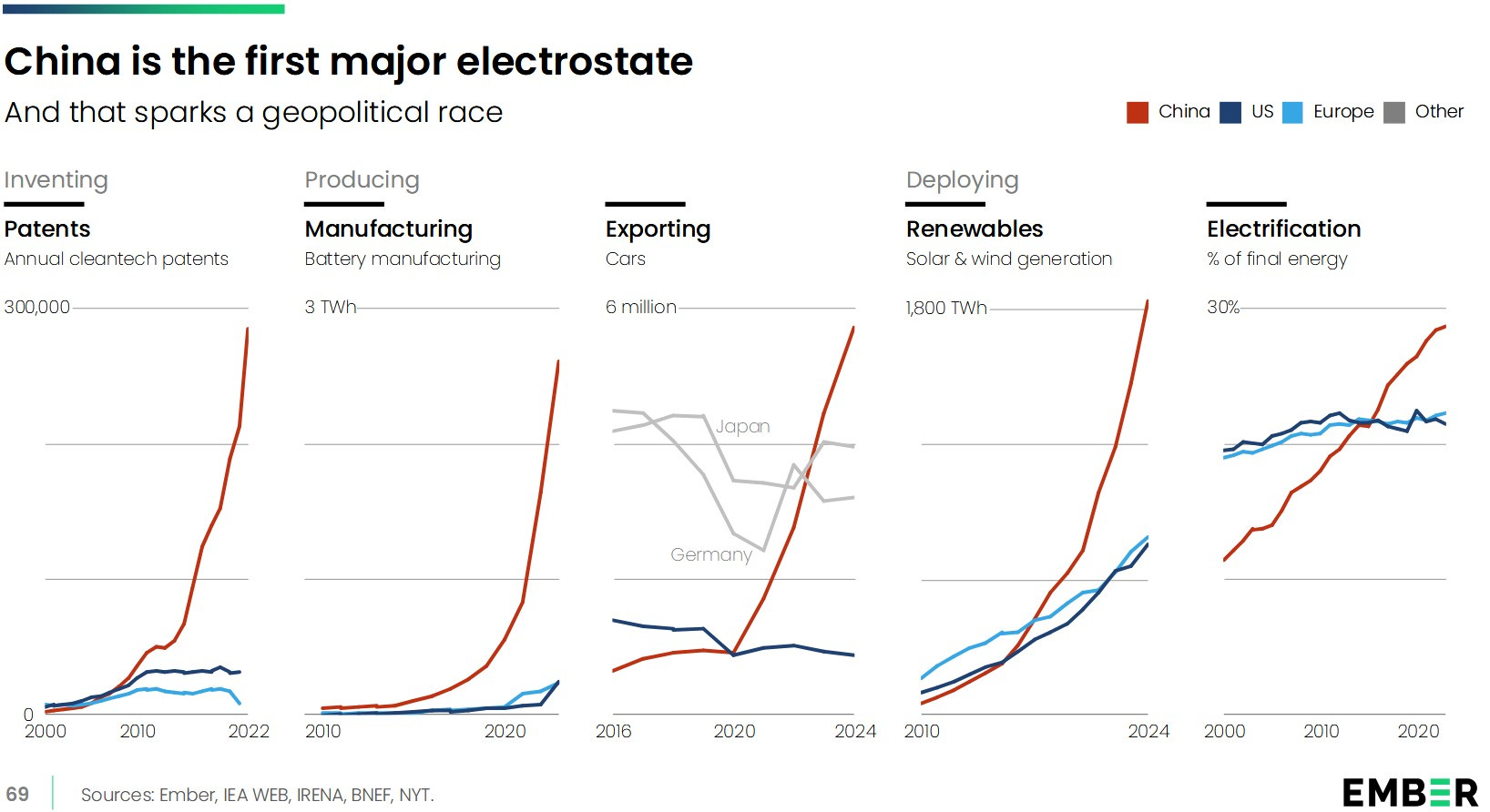
To me, the big ones off the top of my head are America’s descent from global hegemon to increasingly a rogue state, and on a much more upbeat note, the incredible rise of renewable energy, the rise of China as the first electrostate, solar just outpacing every possible prediction, battery chemistry diversifying and providing a lot more resilience.
So what are your thoughts on the 21st century so far? Which is almost exactly my lifetime, incidentally.
A defining moment for me personally, but I think it’s part of this story, is 9/11. Obviously 2001, in your lifetime, but you probably don’t have a memory of it. But I think that defined America’s behavior for a decade and a half at least. and it’s part of America’s descent from this global hegemon with a generally kind of benign direction into what it is now. We’re watching this thing unfold. It doesn’t want to participate in global climate action. It’s increasingly active in a range of conflicts that are of questionable legality A lot of that has its origin in the 9/11 moment.
I think a lot of people look at the personality of Donald Trump, but Trump couldn’t happen in a vacuum. You had to have a political environment that was enabling for Trump. I think that began with 9/11.
The response to 9/11 took America down quite a dark path. Think of the Iraq War, which was basically launched on a false premise, the so-called WMDs that were going to be discovered in Iraq. You had an element of cynicism coupled with a willingness to use military aggression outside the norms of war, outside the norms of international legality. It seems to me that that then leached into a much wider array of areas, and that’s where the climate story comes into this. Because it was of course George W. Bush who withdrew America from the Kyoto Protocol. Which is almost the beginning point of America’s role as a kind of spoiler and a kind of negative actor in global climate action.
Now, obviously, you have the presidency of Barack Obama, an attempt to push back against that. Again, Joseph Biden, obviously, a shorter presidency. But you no longer made the assumption that the U.S. is on board with these actions.
And in the same period of course climate denialism grows and grows. It has a particular strength in America. What’s really interesting is that climate denial is actually quite unusual globally. It’s not a major political force in most countries in the world, but it’s a major political force in the U.S. I guess the only other place where it had some purchase was in Brazil. But even there, I’m not sure that it had a kind of general cultural landing. The idea of rejecting the concept of man-caused global heating seems to be a very specifically American one.
That’s interesting, because the U.S. is so unique in so many ways. It’s the world’s third-largest country, and it’s also the most religious of the developed countries, and it’s also a huge fossil fuel producer in a way that many other developed countries are not. It’s an outlier on a whole lot of graphs, so to speak. And I suspect all of that overlaps in creating a very strong constituency, between the religiosity and the fossil fuel business, for not wanting to believe that humans could change Earth’s climate.
I think that’s right. I think that religiosity is very important. And the significance of the fossil fuel business.
But actually, we’ve talked about the 21st century, but I will, being a bit older than you, stretch us back to the 20th century.
The 20th century is the hydrocarbon century. We can talk about the Industrial Revolution in the 18th century and the use of coal, but the really massive expansion of CO2 emissions is a 20th century story.
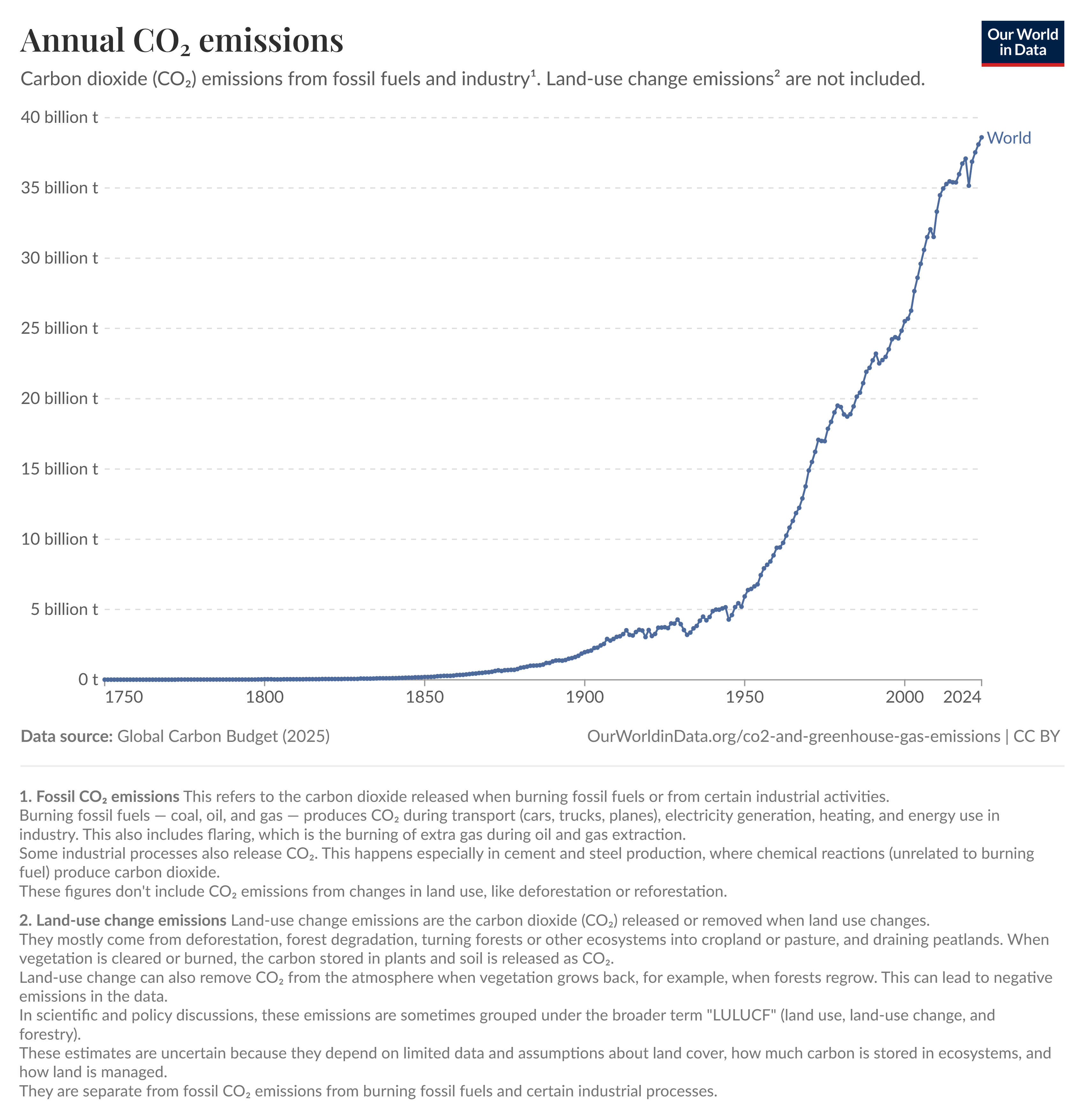
And the 20th century is the American century. I think you can’t disentangle those two things. The global power of the United States was completely tied up with the access to and the use of hydrocarbon energy.
We’ll come back to the point that you made, Sam, about the transition and that being led by China and the rapidity of it. The projections constantly being overtaken, and the cost collapsing.
People are still arguing, oh, this stuff is very expensive, it needs subsidies. Well, as you will know, it isn’t. The cheapest form of energy now is renewable energy.
So all those things are happening, and it’s a profound shift, and it’s happening at the time that the U.S. is losing its role as the global hegemon.
I think you have to recognize that these two issues, the passing of the hydrocarbon age and the passing of the American age, are one issue.
What’s so frustrating about that, as an American, is that it did not have to be that way.
No. You’ve got all the technology, all the great universities, all the science...Yeah, you guys could have been leading the renewable energy revolution. Absolutely.
If we go back to 1973, a year that in some ways is a bit like 2026, there was a political crisis and a military crisis in the Middle East. Energy prices went through the roof. And shortly afterwards, the U.S. government started looking at alternative energy sources. This was particularly pushed by President Carter slightly later. And at that time, of course, because it was quite an obscure subject, it wasn’t politicized. There wasn’t a right or left position on solar panels or whatever.
There was a hot minute in the early 70s where President Nixon was trying to build tons of nuclear power plants and many Democrats were like, “keep jobs for coal miners!” The politics of energy have changed a lot.
Yeah, they have. Even then the Democrat position was around jobs and livelihoods. No one was arguing about whether or not this thing called carbon dioxide might be an issue, because it was just too obscure. It was something that a very small number of scientists were aware of. It was a very obscure subject. It wasn’t really until the 1980s that the big oil companies in the US started to spend money on trying to undermine the science, to try to effectively do a disinformation campaign to undermine the case for anthropogenic global heating.
The statistics on China’s dominance of the renewable energy industry are just extraordinary. Generally over 80 percent, sometimes over 90 percent of all manufacturing in solar, wind, batteries, all these fundamental technologies of the electric age.
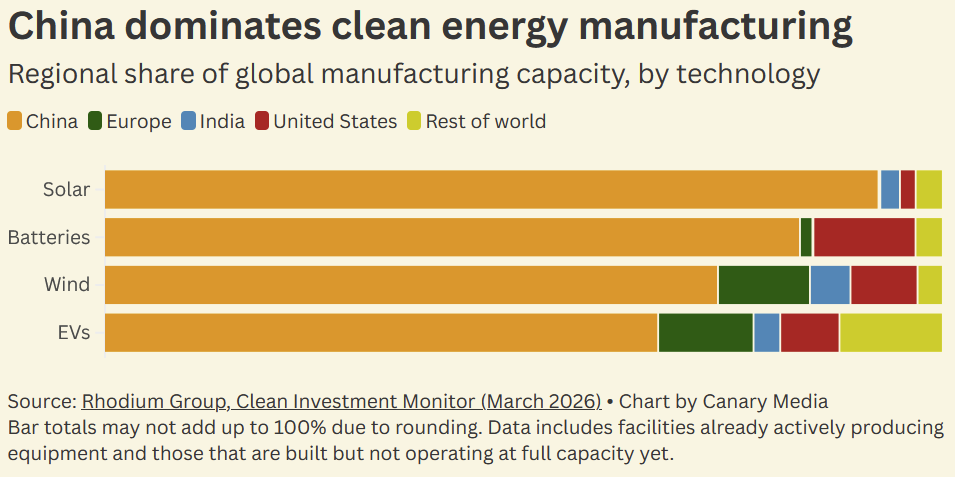
Renewable energy exports accounted for something like 10 percent of their GDP last year. They’ve been consistently installing more solar than the whole rest of the world combined for the last several years, and keep breaking their own record.
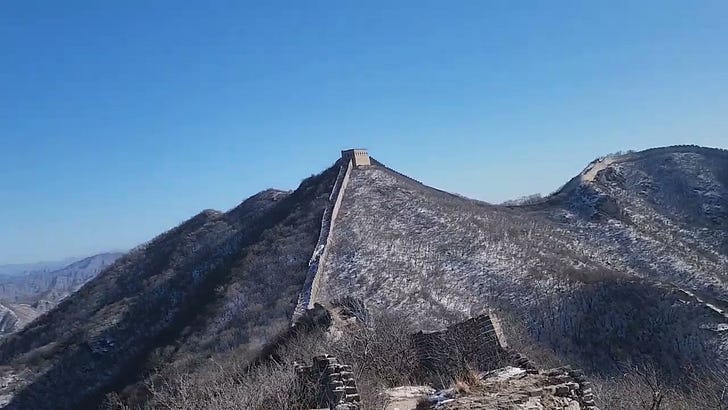
I was just in China recently in January, writing a series of articles and traveling around, and I was blown away. Beijing’s air quality, which was apocalyptic in 2013, was actually great. Clear blue sky when I was there.
Most of the vehicles on the road were EVs. I took electric high-speed trains around the country. I saw the huge transmission lines pulling power from Xinjiang to Shenzhen.
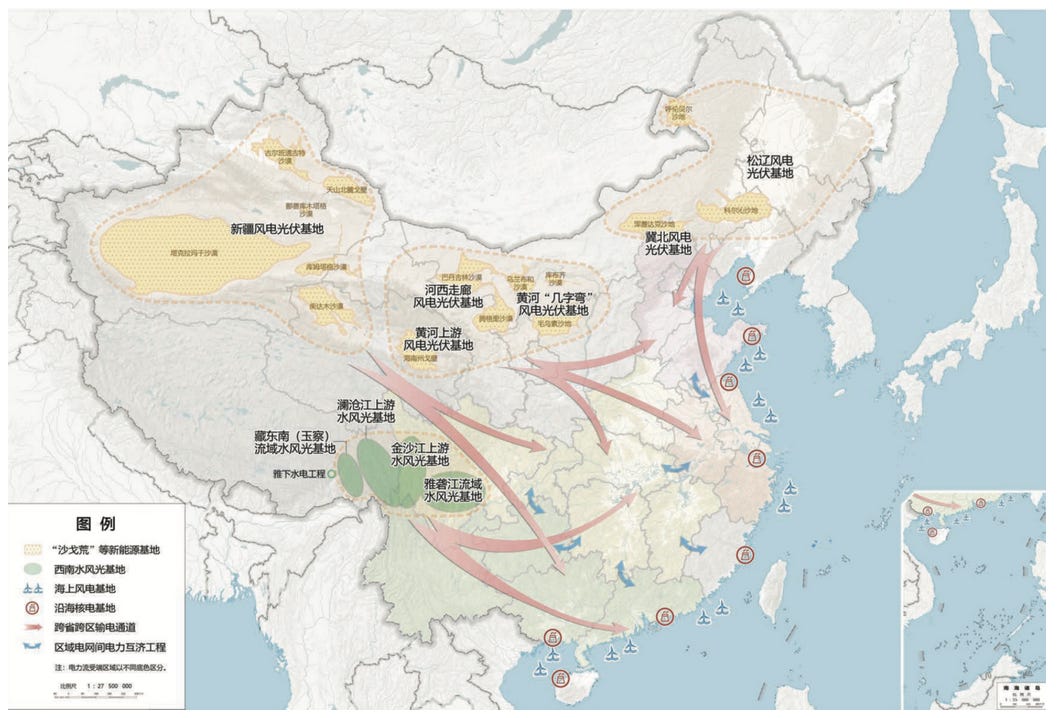
The thing that I think people don’t realize about renewable energy, although they’re starting to now, is that it’s not just mitigation of the climate crisis. It’s adaptation to the climate crisis. It’s resilience. It’s decentralized. It’s harder to kill. It’s less reliant on international supply chains.
What are your opinions on the geopolitical implications of all this?
I write about this in my book. It’s a very classic Chinese story, in the sense of having a long-term plan, having a politically stable situation. Of course, I don’t support an autocratic state as a concept, but the political stability has allowed them to pursue these objectives. And has allowed them, as you just described very eloquently, to completely dominate this sector. As you’ll be well aware, it’s the whole supply chain. It’s the processing of critical minerals. It’s the installation that they’re doing to transform their own economy, but also capturing the entire manufacturing cradle-to-grave supply chain.
The geopolitical implications are profound, because there are a lot of countries in the world that have no problem with adopting Chinese technology. They will do that, and they will do it readily. It is cheap! And as you say, there are all the other advantages of renewable energy.
I mean, we’ve experienced in March and April of this year, once again, a hydrocarbon-based war in the Middle East. Ultimately what became the bone of contention in the war, what it came down to, was the blockage of the Straits of Hormuz, which is a crucial maritime passage for exporting hydrocarbons around the world.
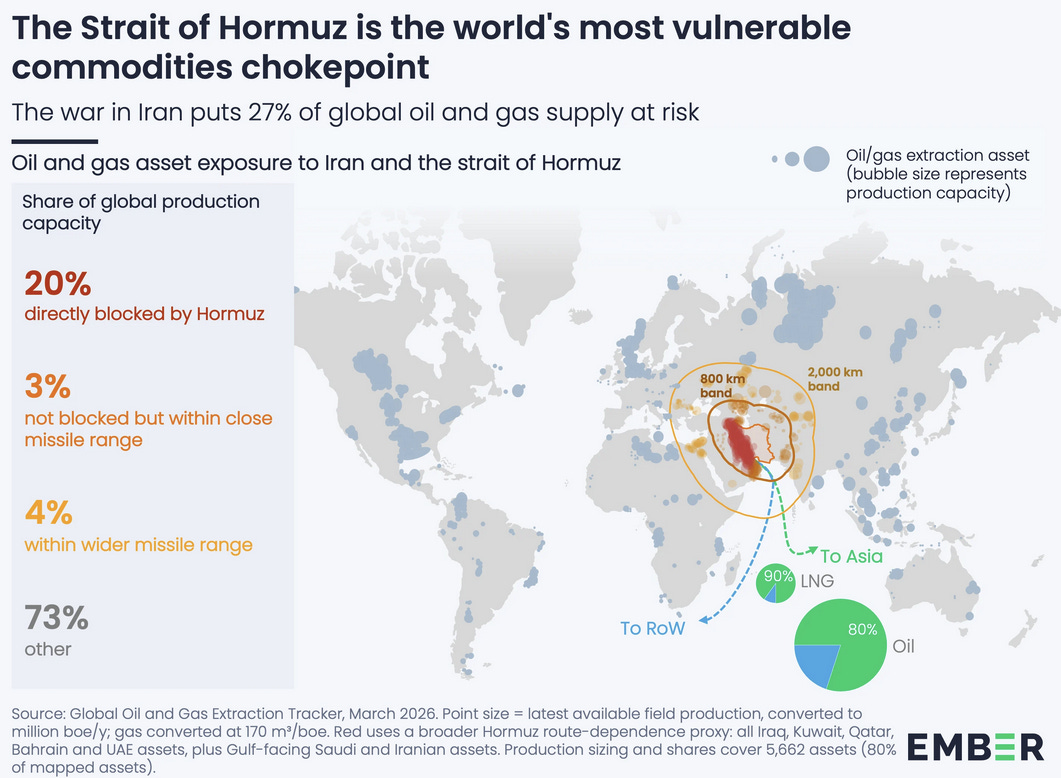
So that’s what the war was about. Once again, it’s a hydrocarbon war.

And so, of course, everywhere, governments, ordinary people, thinkers, journalists are all saying, we’ve got to get off our addiction to these dangerous energy sources. It’s not just what it’s doing to the planet, but what it’s doing to our dependence on a small number of countries, where an economic shock doubles the cost of your energy.
Coming back to the geopolitics of it for China, there are loads of countries that will just adopt Chinese technology, mostly Global South countries, without any concerns.
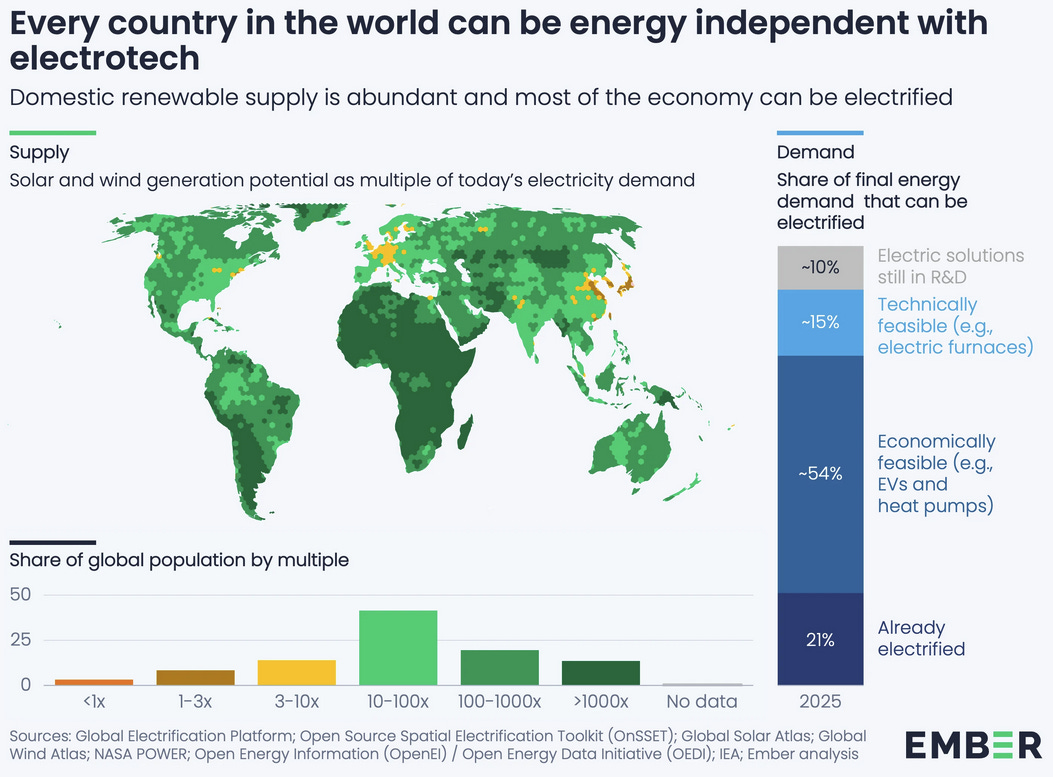
Then you have the Western countries, or the Global North, whatever, where there is a lot of reluctance. Some of that is understandable. There are clearly issues around protection of IP, privacy concerns and so on. Modern energy systems are complex, they involve all kinds of networked systems.
But where it gets complicated for those global north countries is that actually there are hardly any alternatives. I mean, South Korea is still a player in this space, but the Chinese have made such advances, and they’re continuing.
The story of Tesla is quite an interesting one. Setting Elon Musk’s really strange political journey, just looking at the company and the car it produces, they were the world leader in EVs. There’s absolutely no doubt about it. But they’re by absolutely no means the world leader anymore. And once again, it’s China that is constantly innovating and pushing ahead.
This new world, this electrified world, is one in which China is undoubtedly the world leader.
And of course, it’s at a time when China’s economy is anyway edging towards becoming the world’s largest economy, overtaking the U.S. And what goes with that is, if you have a hegemonic power it expects certain geopolitical privileges. The Americans have enjoyed that for a century, and it may be that China expects that too.
That has implications for things like the status of Taiwan. I wouldn’t predict a conflict. I would predict that actually we get to a point where America is in no position to defend Taiwan and doesn’t try to do it, and China is able to, in their terms, “reunite” with Taiwan. Or if you were Taiwanese, you might say annex Taiwan. Whatever terminology you use, the effect would be the same.
We’re seeing increasingly a waning of America’s military preeminence. This overlaps with the Electrotech Revolution too, because China has overwhelmingly the majority of the world’s drone manufacturing. As we’ve seen in Ukraine and Iran, that’s become a central weapon of war.
There’s an argument, and it’s kind of an out-of-the-box argument, that one of the best chances for stable world peace now might be nuclear proliferation. That countries that are at risk of being invaded, that are bordered by countries that have shown expansionist tendencies, like Ukraine and Poland and the Baltic states, and Japan and South Korea and Taiwan, and perhaps even Mexico and Canada, should develop nuclear weapons. What is your opinion?

It’s very interesting, and it’s an argument which has been growing in foreign policy circles.
It’s an argument that still sits slightly in a kind of intellectual space rather than a political space.
If we take a look at Ukraine, this is a great case study. Of course, Ukraine did have nuclear weapons at the end of the Soviet Union. Now, it never had a serious intention of having that as its own nuclear deterrent. The Soviet Union collapsed and effectively Russia’s weapons were stranded in Ukraine.
Ukraine gave up those weapons under security guarantees from the United States and United Kingdom.
Well, we all know what happened. The guarantee did not work. The U.S. and the UK did not defend Ukraine against Russian aggression. Now, if Ukraine had still had nuclear weapons, I think we’d be pretty sure that the Russians wouldn’t have tried to invade it.
And that reality is causing a lot of countries to think again about this. One of the countries that has had a more public discussion of it is Poland. Of course, Poland has a history of centuries of conflict with Russia. On several occasions in history Poland has disappeared from the map due to the imperial activities of Russia and other countries. Poland is now one of the most vibrant and significant economies in Europe. It is a country that has a big military and a big military budget and very ambitious plans to keep growing its military.
And that being the case, does it make sense for Poland to explore having nuclear weapons? Because it is in an unstable part of Europe. It shares borders with Ukraine. It shares borders with a lot of conflicted countries.
It’s very strange to be arguing for nuclear proliferation. But one wonders whether, in fact, it offers a kind of guarantee. Modern warfare, particularly drone warfare, is getting easier. The barrier to entry for a country to be able to attack a neighbor has gotten lower. Iran has these very low cost Shahed drones, and it is able to cause havoc in countries in the Arabian Gulf, UAE, Qatar, Saudi Arabia, and so on, at very low cost to itself.
Iran’s military budget is a fraction of the budget of those Arab Gulf countries and yet Iran has managed to really upend their economic model in a few short weeks.
Speaking of which, the global mega-shift to renewable energy who are the winners and losers of that? Obviously China’s the winner because they’ve invested so much in the technology manufacturing, and America really seems to be determined on doubling down on sabotaging its own renewable energy efforts.
You’ve mentioned that the states that are almost entirely reliant on hydrocarbon extraction will all be seeing serious challenges, like the Gulf states.
Yeah, exactly. There’s two ways to look at this. There’s economic impacts, and then there are climate impacts. Now, of course, those are completely interlinked. But if we think about the Gulf states, it’s where those two things cross over in a really intense way.
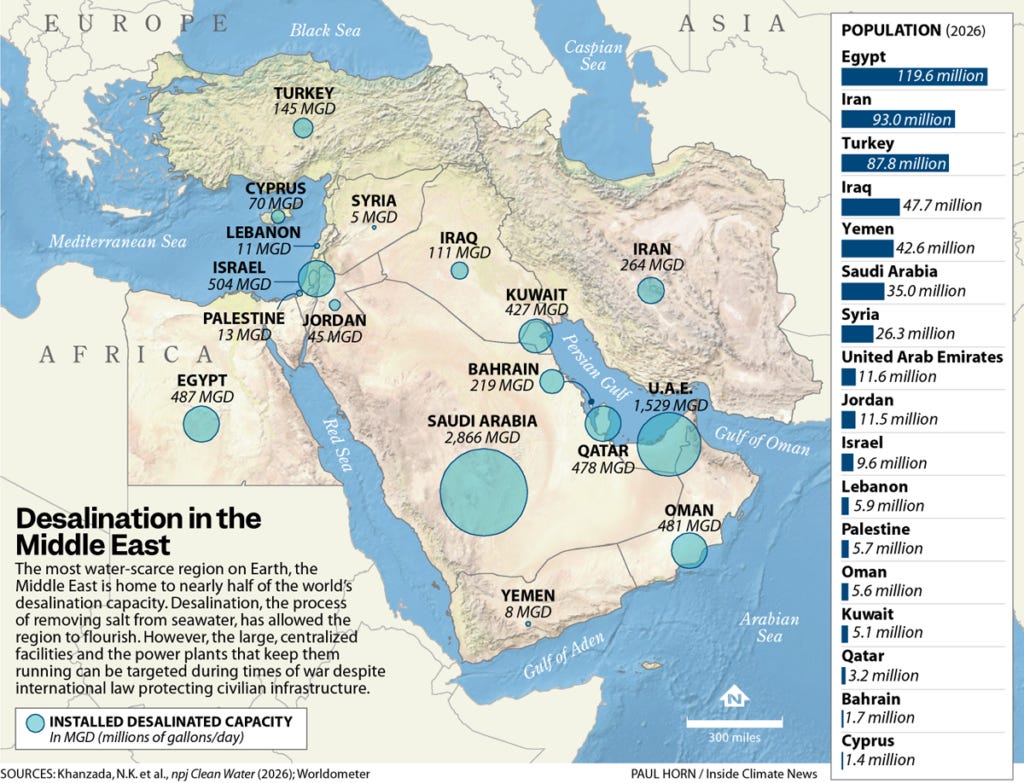
Anybody who’s been to one of the Gulf countries in July or August knows, it’s almost impossible to operate. You spend your entire time inside in air conditioned buildings. The temperatures reach the point that humans can’t exist. People die of heat exhaustion. And that’s now. That’s in 2026. This is going to get a lot worse. The projections are for temperatures in the 60 degrees Celsius range. It’s not functional for humans.
At the same time, as you rightly observed, these are countries whose economies are completely based on hydrocarbon extraction. Now what’s interesting, and I think some of the conflict we’re seeing in the Middle East relates to this, is that these countries have been trying to transition their economies, not necessarily in the sense of an energy transition, but an economic transition.
An example of that succeeding is Dubai. Succeeding until recently. Dubai has created an entrepôt for tourism, financial investments, property development. It’s not an energy economy at all. It’s a different kind of economic model. But what we’ve seen in this war is that it’s quite hard to run that model in a very, very unstable part of the world. If your business model is people staying in luxury five-star hotels and Instagram influencers and all this stuff, and there’s drones flying over there? That doesn’t work. Dubai is looking at a very serious crisis there.
Saudi Arabia, they had Vision 2030. That, again, was a very ambitious program to transition Saudi economy. from an oil-based economy to a post-oil economy based on a mixture of tourism and business.
Vision 2030 has failed.
I mean, that is a statement of fact. It is not going to succeed in making that transition. And some of the biggest projects that were part of that, most notably NEOM, which was this new city, this weird long line in the desert with endless AI-type videos online showing you how cool it was going to be, it’s basically not happening. They’ve scaled back the plans almost to zero. It’s not going to happen.
So what you’re looking at is a region of the world where they’ve probably got a couple of decades left of extraordinary wealth. There is clearly a huge demand for the oil and gas at the moment, as this recent war reminds us but they’ve got a cliff edge.
And to my mind, that is actually part of the explanation of why these wars are happening. Because what you’re looking at is countries desperately trying to become a regional hegemon for those last decades of wealth and plenty, before this moment of crunch where, effectively, they’re going to go over the cliff.
One of the things to remember is that this is a place where you have autocratic monarchies.
And if the ruler is young, someone like MBS, he knows he’s going to be still ruling Saudi Arabia 30 years from now. So for him, this isn’t just like a normal politician. “Well, you know, my successor’s successor might have to deal with this.”
No, he has to deal with this.
He will be ruling Saudi Arabia at the point where the demand for global hydrocarbons collapses. So this is a personal fear that probably keeps him awake at night.
I obviously want to avoid a humanitarian crisis there, but Saudi Arabia has built out a huge amount of solar farms and desalination plants. It seems plausible that even in a 60-degree Celsius future summer, with some stable management, a lot of these Gulf states could become like a Mars colony on Earth, essentially. Desalinating their water, solar power, everyone is in air conditioned buildings.
In terms of influence on the world, I’m not really inclined to feel upset about a decrease in wealth for these autocratic monarchies. The UAE’s funded the mass-murdering RSF in Sudan. The Gulf states have paid substantial bribes in cryptocurrency to the current U.S. regime.
They have funded some good renewables and infrastructure development in Africa with stuff like Masdar and DP World, but they’ve also funded just a vast amount of corruption and insidious political influence in democracies.
Obviously this is a huge question, but is that a net positive?
I take your point. These are not sympathetic cases. And you’re absolutely right about the renewable energy. These countries are investing in it. They’re not climate deniers. They might deny actions to end fossil fuel use at the COP summit and that sort of thing. But they’re not climate deniers. They are investing and they’re aware of this shift.
But I think there’s a couple of issues there. There are different dynamics, and this is why I focus on Saudi.
The countries where you have a small citizenry, so Qatar, the UAE, Bahrain, Kuwait, the number of citizens in all those countries is a small number. And it’s possible, maybe, that you could continue effectively to live off the interest of your capital, basically. Your economy becomes quite unproductive, but you could keep the lights on from long term investments, like a kind of pension.
Saudi Arabia is very different. Saudi Arabia has a big population. It’s going to hit 50 million by the next decade. You can’t operate that model in the same way where effectively you don’t really expect the citizens to work and you manage it through migrant workers.
But then let’s talk about migrant workers, because you mentioned that.
Now, obviously, the way these people are treated is deplorable, and they have very few legal rights, very unsafe working conditions, there are lots of tragedies, lots of accidents and so on.
But again, at a certain point, they might struggle to recruit these workers, because if you can’t actually operate outside, are people still going to risk their lives in order to work in those environments, particularly if they’re coming from countries whose own economies are growing?
So most of these workers are coming from Southeast Asia, South Asia. They do it because they want to send money back to their family. They want to work for a few years, go back, maybe build a home or whatever. It’s completely understandable.
And one might say when it works, although we could question the conditions and all that, it’s a positive because it allows people to improve their economic situation.
But at a certain point, the system breaks down if it’s actually not possible to get people to work outside. Or you can only do it for a few months of the year, so therefore construction projects become much slower.
There are all kinds of knock-on impacts of this shift, which again, I think a lot of people haven’t really thought their way through.
And this overlaps with another big trend, which is the massive global demographic shift. We’re used to a world of massive human population growth, since really the Industrial Revolution, where there’s just always another worker coming along in a minute, and that’s really changing.
China’s population has been declining since 2023. India just fell below replacement-level fertility.
Is the answer that all of these places are just going to eventually double down on Africa for migrant labor? Is there going to be increasingly competition for migrant labor? Will this be counterbalanced by just climate disasters pushing people to move? Or will we eventually be looking at a scarcity of migrants when historically they’re viewed, however unfairly, as a burden?
That’s an interesting question, and it’s one I haven’t really looked at. I think climate will cause a lot of migration, and we haven’t really touched on that. I think it’s very likely that you’ll see migration out of Saudi Arabia and out of a lot of the Arab world. We talked a lot about the Gulf states but of course you’ve got states in the Arab world that face similar climate impacts but that don’t even have the economic cushion that we talk about. Egypt, or Iraq. And Iran is not an Arab state, but it’s a state of nearly 100 million people, again with very severe climate risks coming down the track. So I think we’re going to see a lot of migration.
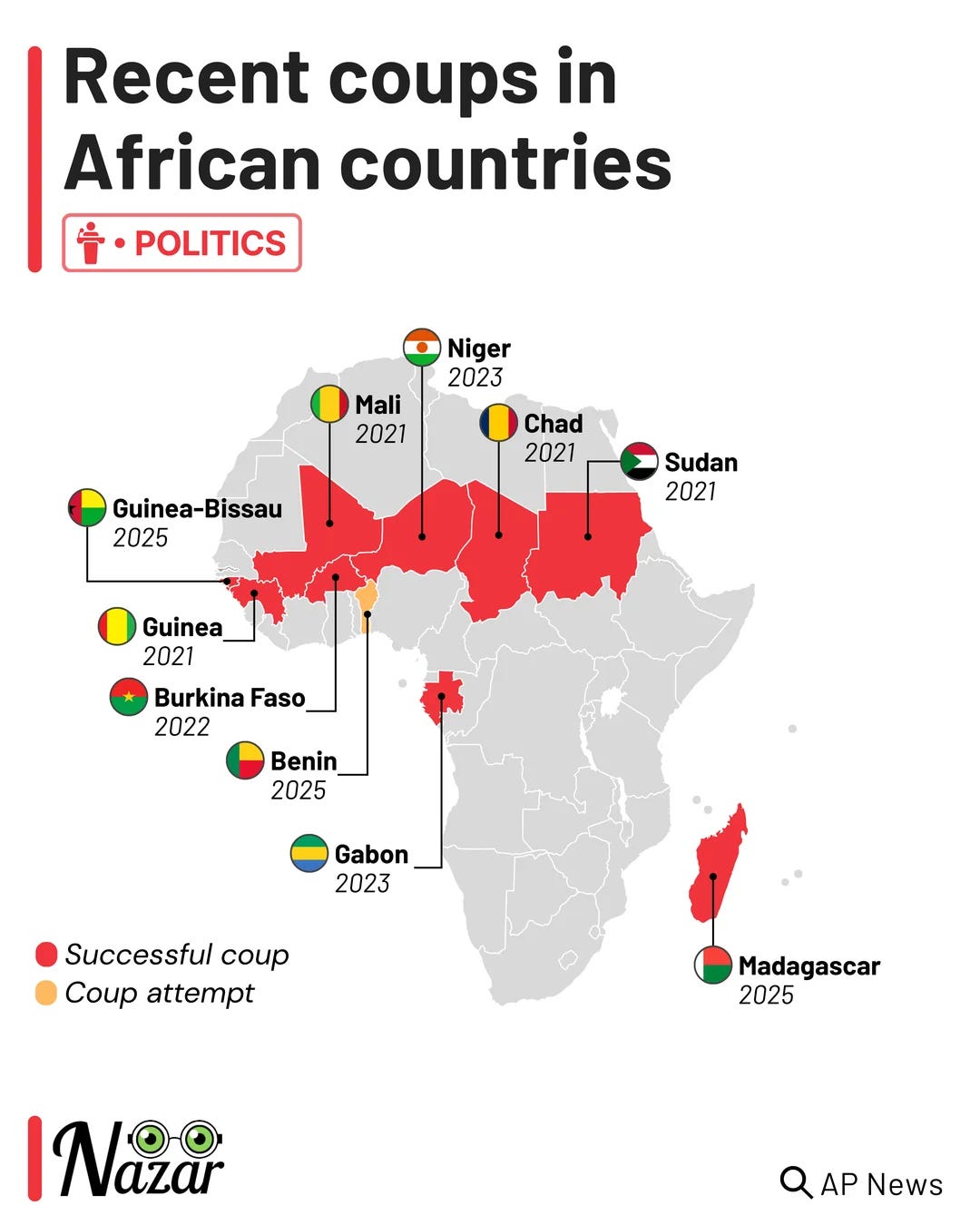
And again, with Africa, in particular, the Sahel region, as you’ll be aware, across the entire band from the Atlantic Ocean to the Red Sea, you’ve seen a real destabilization of every single country. You can draw a line. There’s been a military coup in every country over a short period. Unstable governments, foreign intervention. You have the French, and then you have Wagner, this Russian mercenary group. You’ve got, obviously, the war in Sudan, again, on that line.
Those are countries which do still have very high birth rates. I think you’re going to see a lot of migration out of there.
Migration is a complicated subject. We’ve seen it weaponized by right-wing politicians all over the world. It remains the case that most migrants don’t leave their country, or if they do they go to the nearest country. There’s this myth that all these people are going to come to Europe or that Central America will all go up to north America. But there is definitely going to be more of this.
One of the interesting areas that I looked at in terms of migration which I haven’t seen particularly well covered elsewhere, is migration out of China caused by climate. Because, of course, China is doing amazing things, but parts of China become very hard to live in in a climate crisis or climate breakdown world. Particularly the northern Chinese plain where you get these very dangerous summer wet bulb temperatures, intense humidity and heat.
Now, we’ve already seen that quite a lot of Chinese migrant workers are working in eastern Siberia, so in the Far East of Russia. The numbers are hard to track because the Russian government doesn’t really want to record it, but they’re quite happy to have the labor because it’s an extremely sparsely populated area.
As the climate shifts, you get new areas that are better placed for agriculture in that Far East of Russia, which a few years ago were not functional as agricultural zones. We might see quite a shift of that.
And of course, what’s interesting about that is that historically China lays claim to those territories.
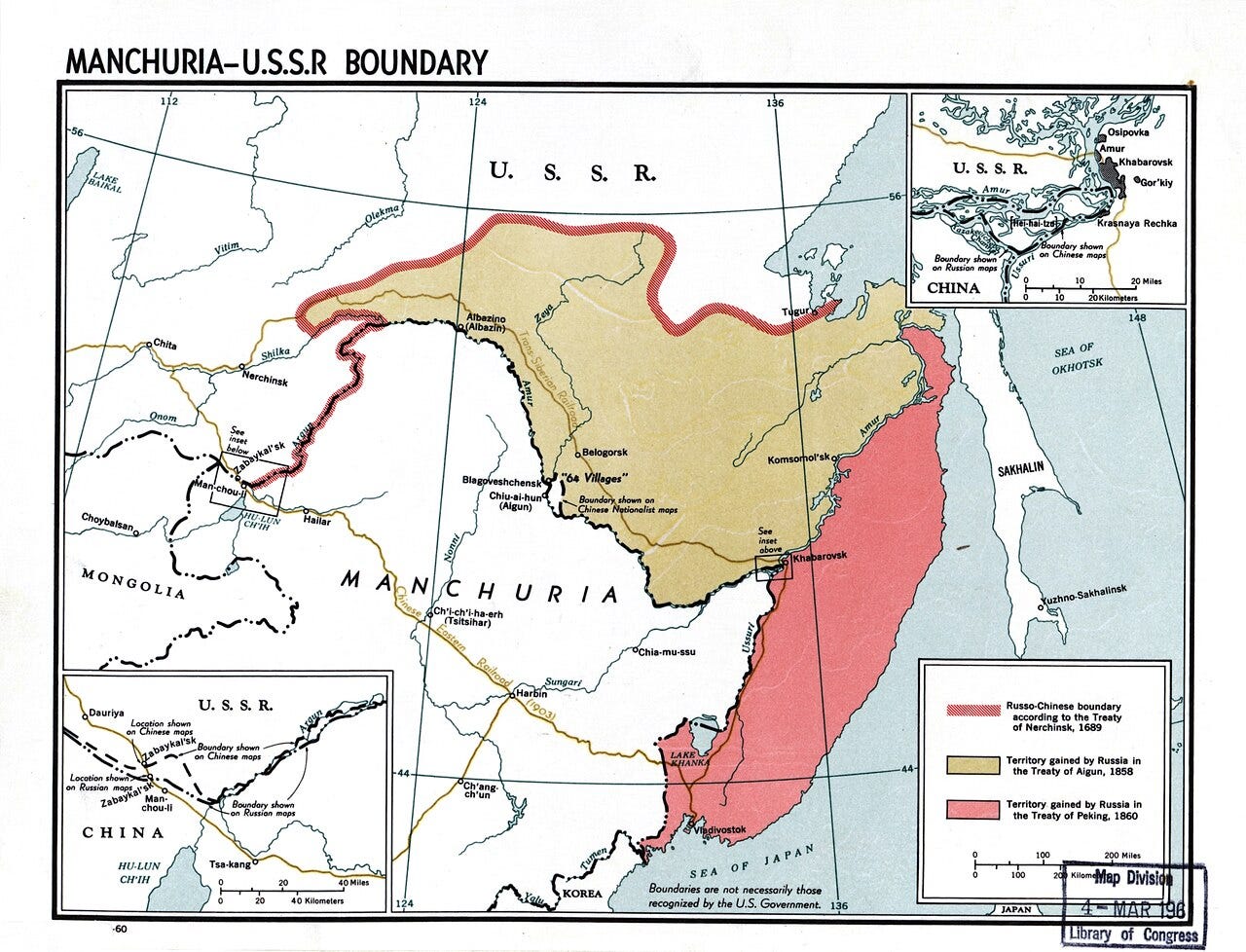
Those were territories that Imperial Russia, seized from China in the 19th century, in 1860. The climate is sort of redrawing a map.
I’m not suggesting that China is going to go and invade Russia. Again, nuclear armed states are very unlikely to go to war. But I think you might have a kind of economic colonization unfolding as Russia’s economy is very dependent on China. Increasingly. Especially since the Ukraine war.
And also, China is now richer than Russia in many ways. When Chinese locals go to Russia, they’re not working as like, household servants or something. I’m just explaining this for readers. Because this is not at all similar to the case of Mexicans coming to America. Today, the Chinese going to Russia, they’re generally setting up an essentially extraterritorial little colony. like a mining or lumber camp, where it’s all Chinese people extracting resources for the benefit of China, so to speak.
Yeah, exactly. And in fact, that idea of extraterritoriality, what I think is so interesting about this is that if we go back to the late 19th, early 20th century in China, Western countries did exactly that. They had cantonments. There would be a district of Shanghai where British law ran or French law or American law.
For China, understandably, this is seen as a period of humiliation. Western powers came to China and didn’t even respect Chinese law. They operated their own laws within a certain space, effectively a kind of colonial system where the white man was seen as superior and so on.
I’m not suggesting that China will replicate that model. But a version of that may be coming in the future where because of China’s economic and geopolitical power, it operates economic colonies. Special economic zones, things like that, where probably Chinese law and Chinese norms are enforced, even though they sit geographically in another state.
And we’re already seeing more of those. Like the Simandou Corridor in Guinea. The giant iron mine that’s essentially just Guinea leasing the rights to mine a huge amount of iron to China in exchange for a percentage for the Guinean government, which is one of those Sahel governments formed by a military coup in the 2020s.
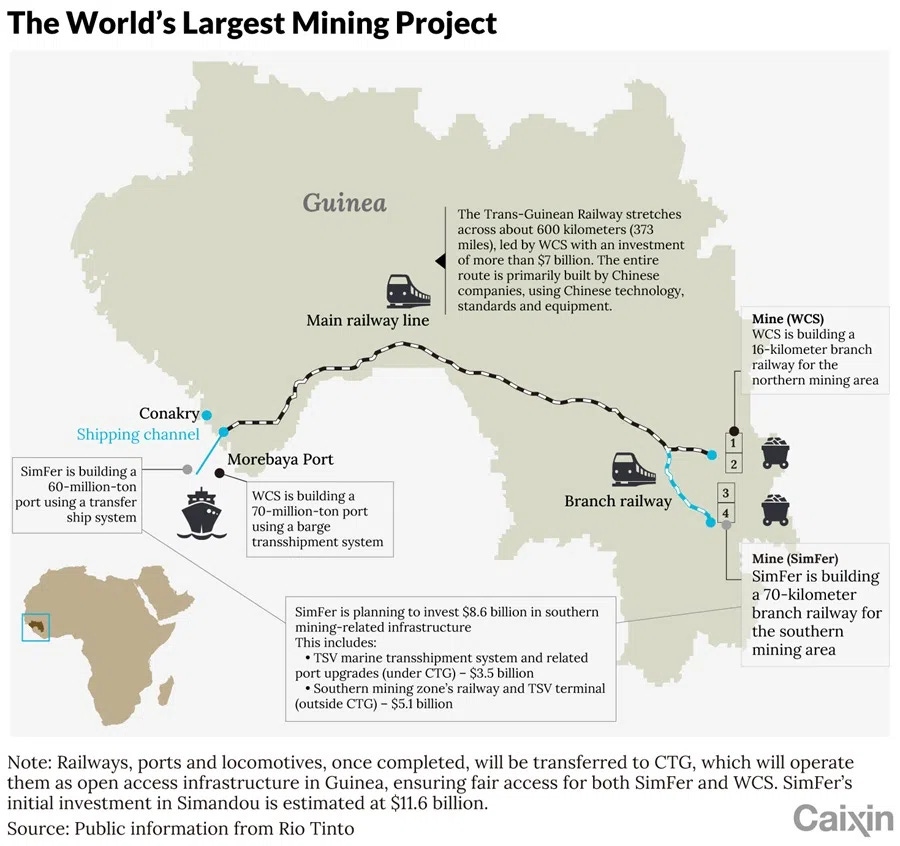
Yes, exactly.
A constellation of Chinese cantonments, SEZs and places like that, is to some extent already forming.
But, sort of in the same way that migrant workers voluntarily going to the Gulf states are often abused but often do manage to return home with enough money to improve the lives of their families, is that bad?
A lot of really impoverished countries in the world might benefit from Chinese investment, even if it’s completely transactional, if it comes with some spillover effects with more Chinese technology, stuff like that.
What’s your opinion on the rise of Chinese extraterritorial zones?

Well, in a way, I might say it doesn’t matter if it’s good or bad and it doesn’t matter what I think. Ultimately, as you say, this is an economic reality.
If someone starts a mine and creates jobs, that is adding economic opportunity or at least economic activity to a certain place.
Now, of course, there are specific things that happen which will be bad. The safety in some of these mines. Rulers of countries are probably being paid corruptly. But of course, we’re now existing in a time when the United States is also perfectly comfortable with that model. Clearly, this is rather like nineteenth-century colonialism. I’m not going to try to defend it, but it clearly brought economic activity, both in the form of extraction but also in the form of development. That is probably what we will see as a result of China’s activities, whether we’re talking about Africa or Latin America or whatever.
On a more positive note, there’s a new report from Ember on this, it looks like in quite a lot of countries, Pakistan’s the most famous one but increasingly much of Africa as well, solar exports from China to that country are much greater than the country’s own tracking of solar being installed. Implying that there’s quite a lot of invisible small-scale solar, so to speak, that isn’t appearing in government registries. In Pakistan that’s now like a fifth of their entire electricity system!
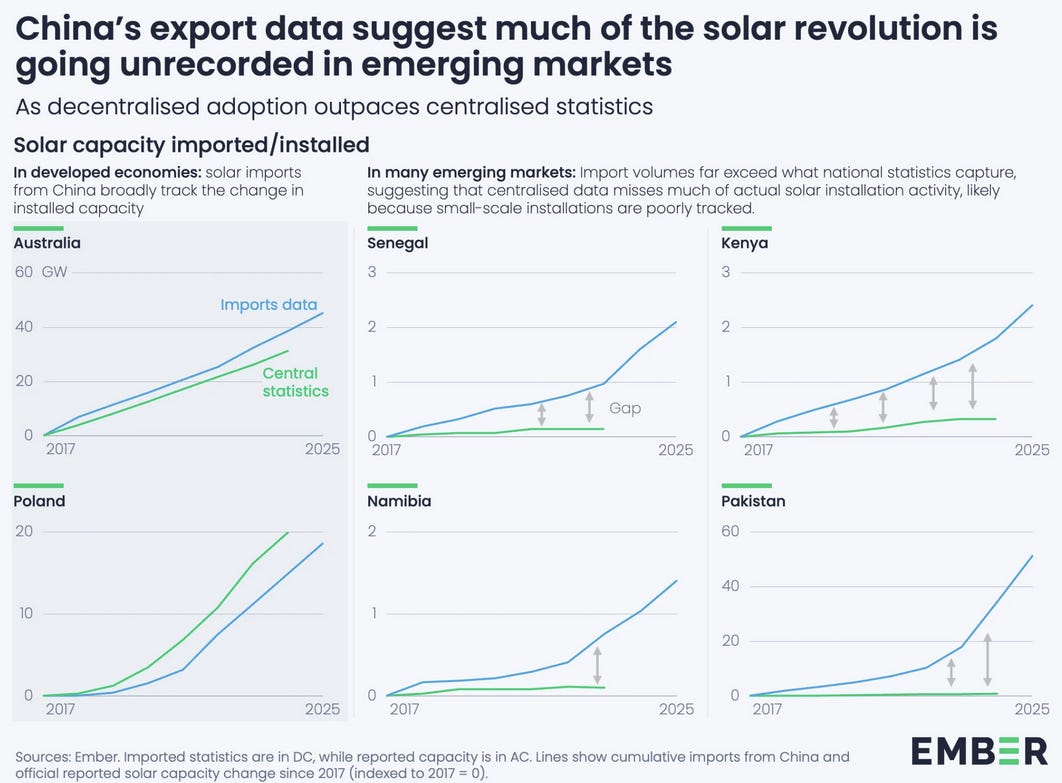
In countries that are willing to trade with China, there’s a mass grassroots adoption of small-scale solar. My personal pet theory of optimism is that that really, really, really blunts the impact of the climate crisis. Not even primarily through mitigation of emissions, but in, like, charging one phone so the people of a whole village can get a weather report ahead of a storm.

When I was in Delhi in 2024 during a record heat wave, just one little fan in a little paratha shop was like a little cooling oasis for the neighborhood. Even a little power can really save people from climate disruption, and there’s now so much power being spread with solar panels!

What are your thoughts on the global decentralized clean energy surge?
That’s really interesting. Anecdotally, I’ve seen the same from my travels in Global South countries. People act out of simple economic self-interest and calculation. And if you live in a country where the grid energy is both unreliable and expensive, and somebody is saying, well, look, you can heat water with this thing, that’s becoming incredibly common all over. Now, for not very much money, you can install PV. Whether it’s micro-scale, just to charge your phone, or people on the fringes of the middle class feeling able to, power their homes with a few larger panels.
You have this kind of political argument going on with politicians, particularly in North America, saying this stuff is all a scam and it’s never going to happen. Meanwhile, people in Pakistan or wherever are just going to go and buy a panel and get on with it.
Another country where you see it is Nigeria, which is a famously poor country. The electric grid system is terrible, years of underinvestment and corruption mean the amount of generation for the country is tiny given the size of its economy. But again, there’s just a whole invisible private grid that that is growing all the time that we can’t see. It’s quite hard to measure, but it’s definitely there.
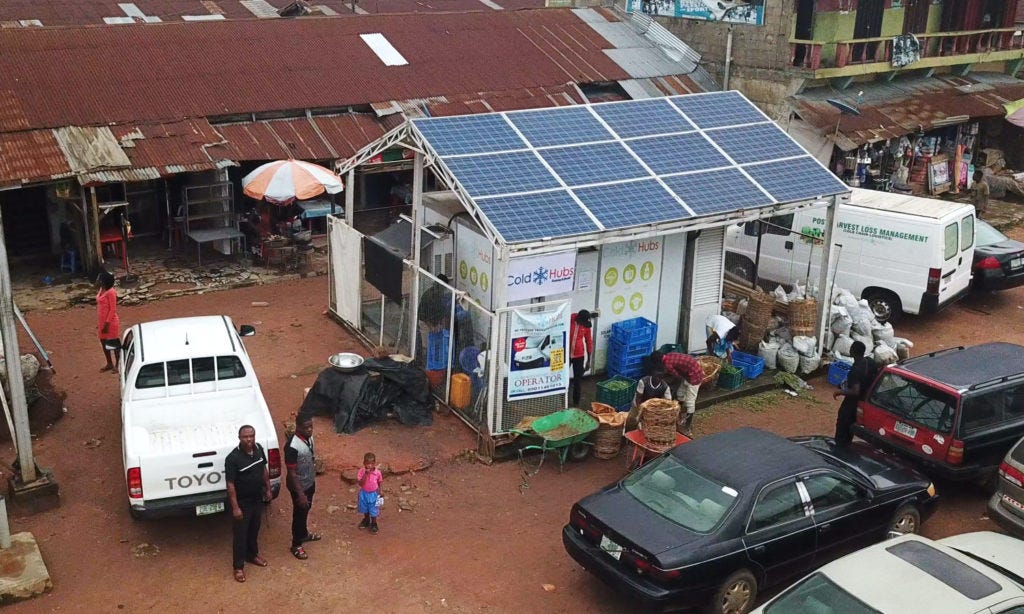
And that could save a lot of lives. That could really transform the outlook for Nigeria and Pakistan. That could redefine our very concept of developed, kind of in the same way that a lot of Africa got Wi-Fi before paved roads.
Yeah, totally. And of course, it’s an enabler for all the other things because, you know, try running a business without power. I worked as a diplomat in Nigeria, very much in the hydrocarbon era, in 1999 and around that time. Within the British Embassy, obviously a highly resourced environment, we relied on diesel generators. They would have to kick in four or five times most days! Most people don’t have that. Try running any kind of normal business when the power goes out for four or five times every day!
So there’s the economic boost you get from having an energy source. If you know daylight hours in Nigeria, you’re never going to lack solar energy!
There’s an emerging wave of studies, and this is a very niche area, finding that renewable energy, particularly solar farms but also offshore wind, can not just not harm, but actually have positive benefits for biodiversity and crop productivity on the same area.
There’s the whole field of agrivoltaics. In dry areas, solar panel shade can reduce UV exposure and retain moisture in the soil. You can actually grow more food if you have solar panels in the same field also producing electricity!
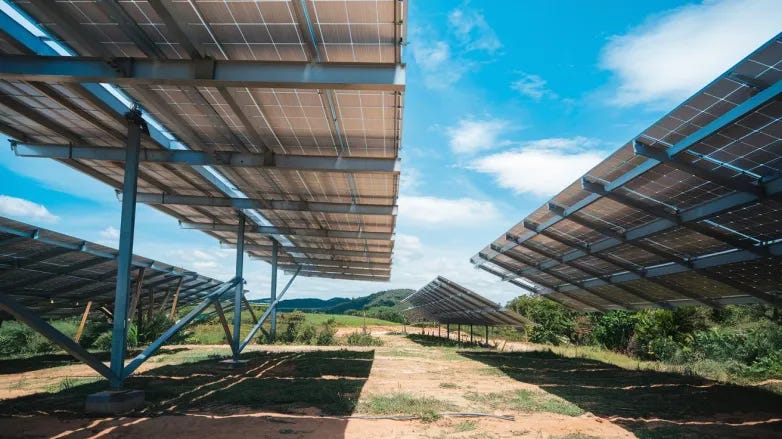
There’s even studies from the deserts of China and the grasslands of Colorado, showing increased biodiversity and wildlife in a place where you just built a solar farm than in a wild landscape nearby. There’s more native plants, more biodiversity!
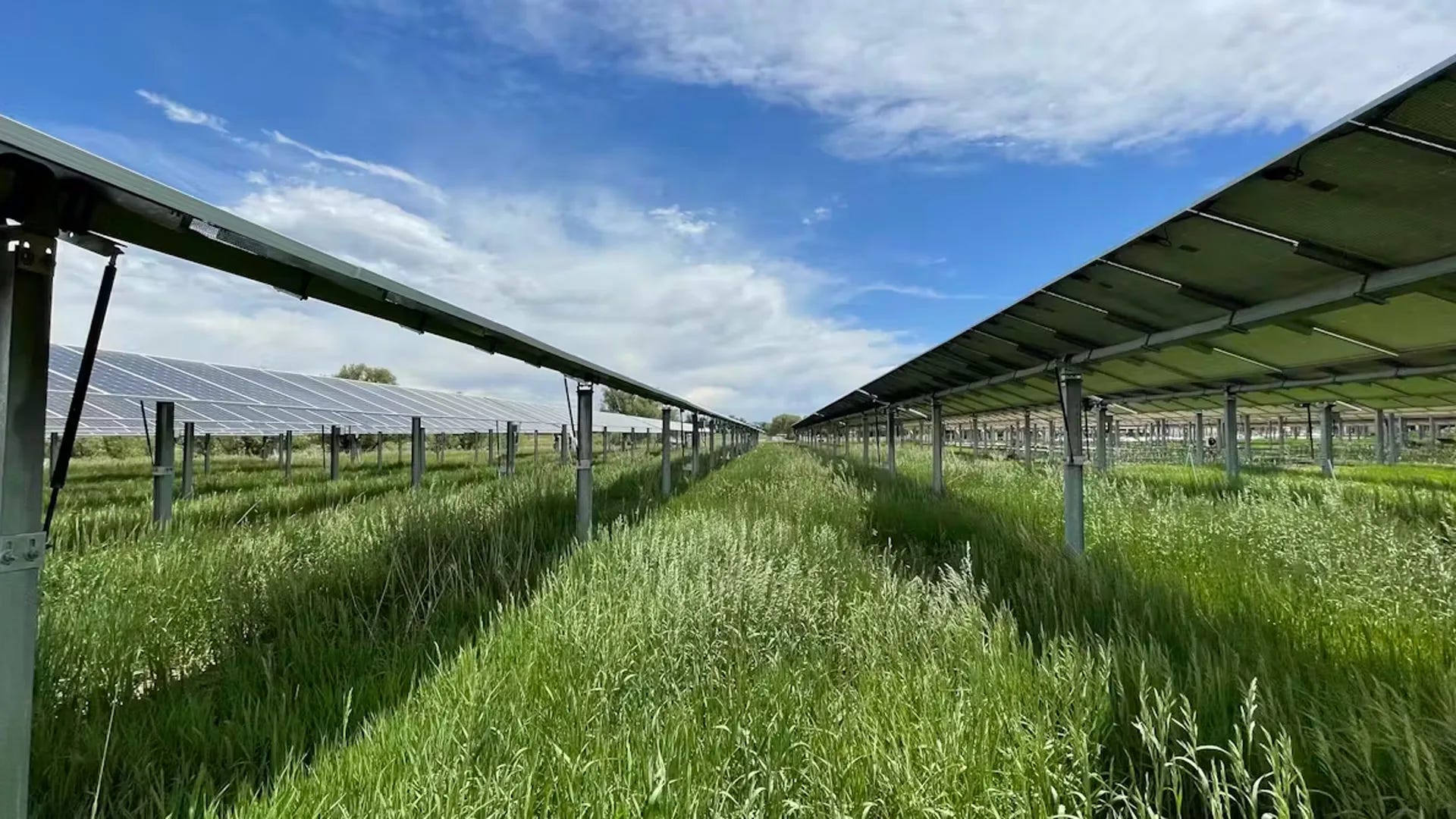
I’m really interested in the possibility of these electrotech landscapes spreading.
Effectively, you’re talking about a kind of canopy, aren’t you? It’s a canopy of PVs rather than mature trees.
I haven’t looked into that much. Certainly here in the UK, in rural Britain, you have, some would say, an overly protected landscape. You’ve got a lot of farmland, not wilderness, not national parks, it’s agricultural farmland but it’s treated under zoning and planning laws as if it were a sort of protected wilderness.
There’s been a lot of people trying to push against solar panels and saying that they’re unsightly, they’re misusing land that should be put to food production.
But actually what some farmers are saying is, look, we’re using this land for food production but we’ve got solar panels on it as well! Whether it’s having poultry underneath the panels or sheep to graze, there’s all kinds of things you could do with this land as well as use it for electricity production!
One of these arguments that hasn’t really broken out for people people to be aware of is the fact that putting a big solar installation in a place does not stop you from using it for other purposes, and it may have beneficial impacts.
That’s something I’m really excited about!
What are your thoughts the potential for more rewilded landscapes? Moving out of the politics realm. We’ve seen a lot of rewilded landscapes recently, especially in Europe. We’ve seen huge shifts in land cover as people withdraw from farms.
And now a lot of countries, including some countries that are traditionally thought of as developing countries, places like Colombia, Chile, Sri Lanka, Thailand, are now hitting very low total fertility rates. China’s now below 1.0 TFR!
It may be selection bias, but I feel like whenever I see a country with notably huge declines in fertility rate, I can also immediately find tons of really big new conservation projects and protected areas. Maybe that’s cultural-psychological, a sense of enough space for both people and nature. Maybe it’s just economic, there’s less small-scale farmers hungry for land.
A lot of projections now estimate a peak in human population by the 2050s. The whole planet’s TFR is around replacement rate and falling.
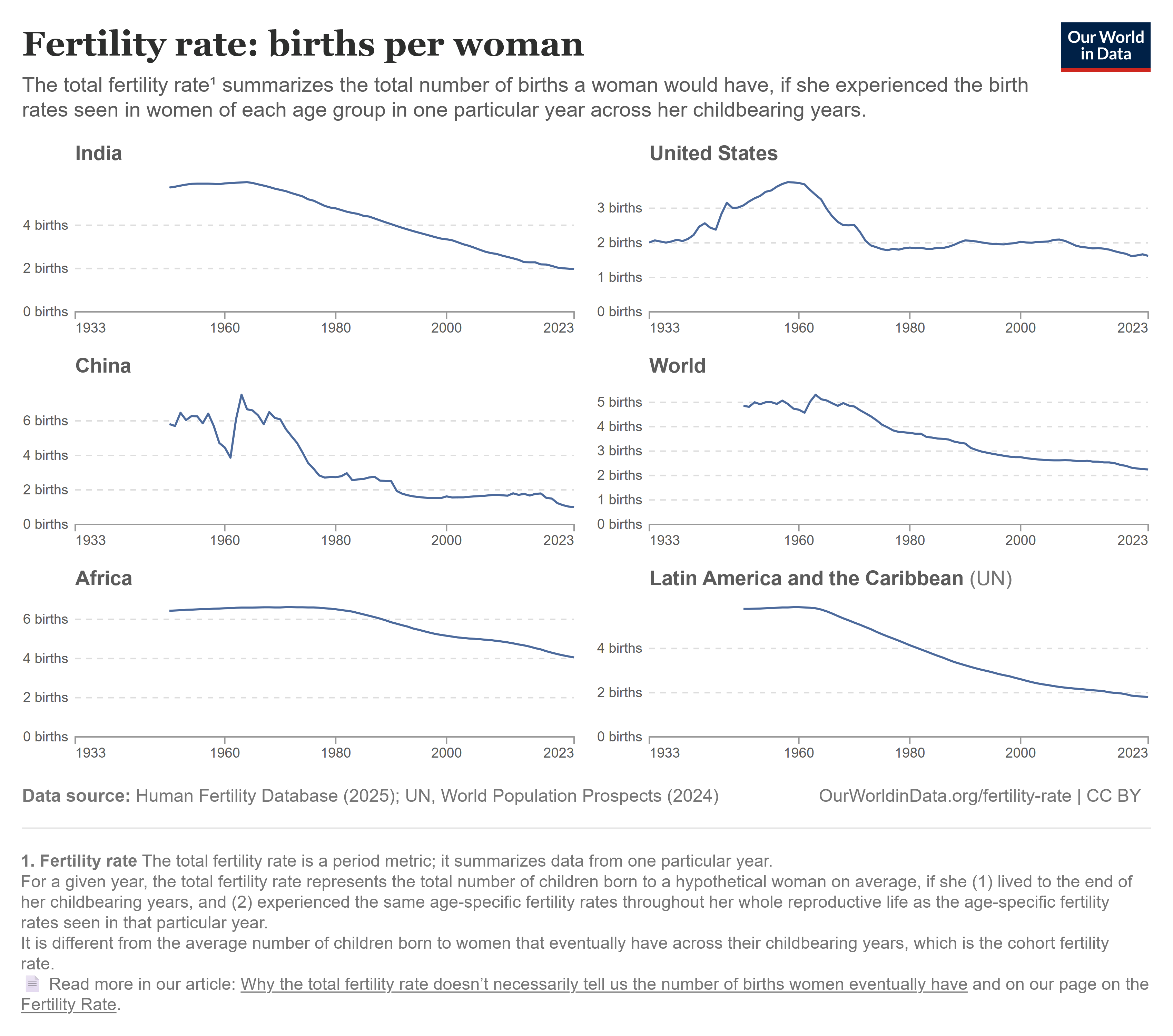
What are your thoughts on these potential shifts in human population? Intersecting with the renewables revolution and the end of the hydrocarbon age and American hegemony and climate change heating up. How do these play into each other?
It’s a big question. I think one element of all of this which we haven’t touched on is actually food production. Obviously for centuries as the world’s population has expanded, people have imagined that we might run out of food, and we haven’t.
Actually, human ingenuity, improved agricultural techniques and all kinds of other things, have managed to keep food production growing even faster than the growing population.
Now, I think the climate crisis makes this harder. But also, and I think this is very important, there’s the changes of habits. Particularly China and to a lesser extent India, as people enter the middle class they want to eat meat. That, as you know, requires much larger inputs, larger areas of land and so on, so that even as global population growth is slowing down the amount of land needed, with the combination of changing habits and the climate crisis the amount of land needed to feed those people could increase.
At the same time, I mean, you mentioned Bulgaria. There are places where the population has shrunk and there will be rewilding and that, of course, has all kinds of positive impacts.

China, you know, the meat of choice is pork. The pigs that China feeds on are fed with soybeans grown in Brazil. That’s the current model. Now, the destruction of the Amazon is impacting not just the Amazon itself, but the neighboring areas in terms of the rainfall patterns and so on. So things like that are quite complicated.
I don’t foresee like a global famine or a food crisis like that, but certainly you have more competition and pressure at a global level.
There are other elements of this. Something I write about in the book is about rice. Ironically perhaps, because one thinks of it as a tropical plant, it doesn’t do very well in high temperatures. A big part of the calories consumed on Earth are consumed as rice. It’s completely part of the culture of food in Asia. You know, rice has almost a kind of mythical status. There’s no option where people say, well, we’ll stop eating rice, we’ll eat something else. That’s not going to happen.
Aren’t rice yields not falling, though? There was a great post by Dr. Hannah Ritchie. In 2025, most staple crops hit record high yields, including rice, at least globally.

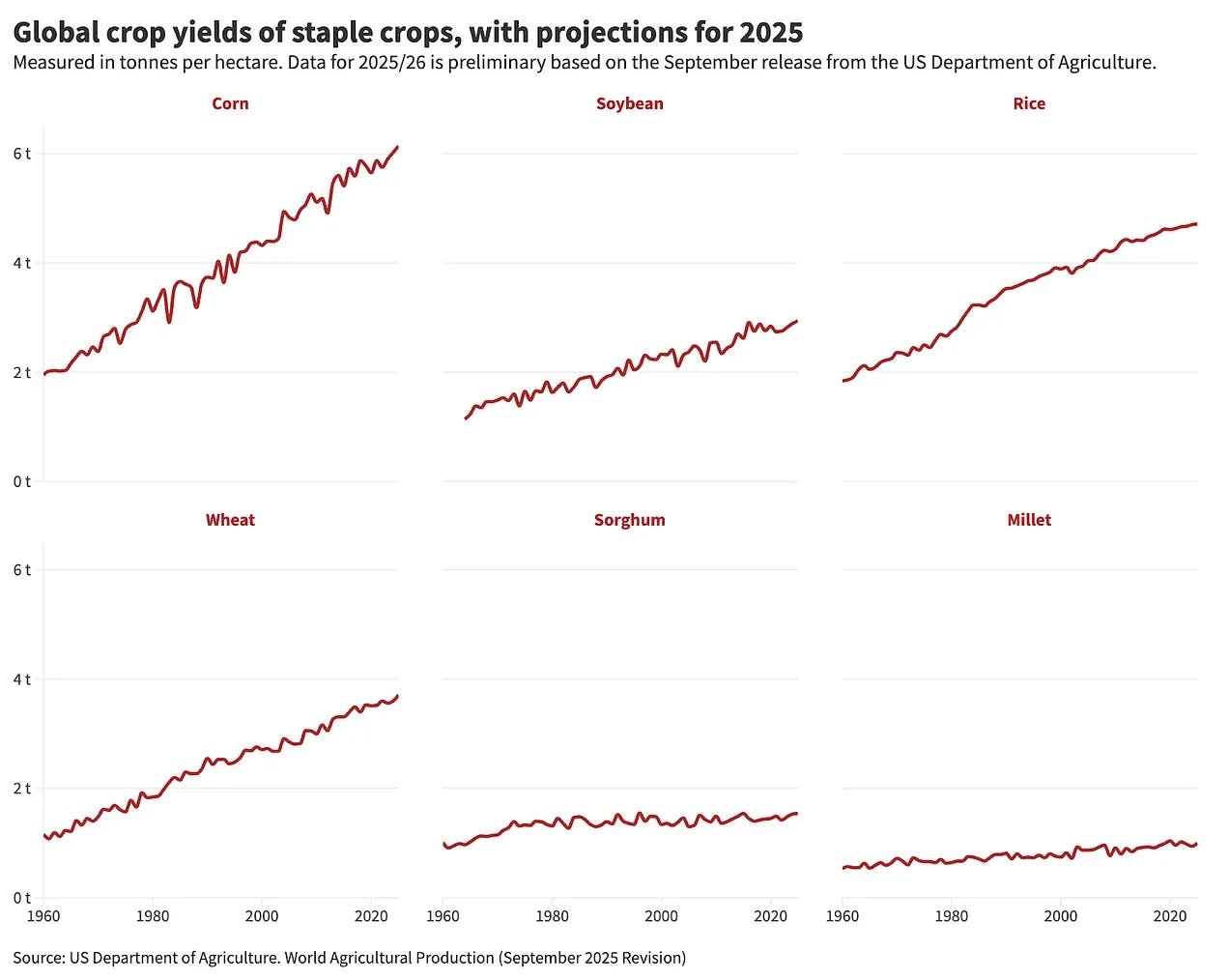
Yes, but over the long term trajectory there’s that combination of higher heat and higher extreme weather events. Very difficult for farmers, basically. China has this new food security strategy, and identified this issue that a lot of the core staples that Chinese consumers feed on face headwinds in a climate-adapted world.
Of course, there’s all kinds of things that can be done. New strains, things that do better in certain conditions. In Bangladesh they developed a strain of rice that that can that survives floods effectively! But I do think generally that the global food systems are going to see a lot of strain.
Mediterranean Europe is another good example of a very important agricultural zone, particularly for Europeans, where the climate is getting very hot and very dry. Add extreme weather events into that, and it just makes it harder for farmers to operate.
I’m actually really optimistic on food production. In 2020, like a fifth of Iowa’s corn crop was smacked down by a derecho, an inland super-storm. Since then they’ve started really rolling out a new corn strain, genetically modified so it’s much shorter, much more resilient, has a wider and stouter stem, and it’s just harder to knock over.

In Canada’s prairie provinces, Alberta, Saskatchewan, Manitoba, they’re seeing much higher staple grain yields despite much more erratic weather, in part due to adoption of no-till practices, in part due to new strains, stuff like that.

Given the immense ongoing demand for it and the high pressure to innovate, I suspect that food yields will stay pretty solid even despite climate headwinds. What do you think of that hypothesis?
I think it’s perfectly possible because in the end, there are lots of examples of humanity finding ways to adapt, finding ways to deal with the challenges of the shifting climate. We haven’t talked about intensive indoor farming hydroponics all that kind of stuff. So there are many possibilities. But it’s certainly the case that if you look at for example productivity in Brazil, certain areas are facing these headwinds.
And yes, it may be that they can shift. They’ll find new ways to handle it. But a heating world with more extreme weather events is generally, I think, quite challenging for farmers.
I agree. I just think there’s a lot of really interesting innovation that could counterbalance that or more than counterbalance that.
What question should I have asked that I didn’t ask? The meta-question. What do you want to answer that you haven’t been able to speak about that you think is important to share?
That’s great.
I mean, we’ve covered a load of ground. It’s been a really fascinating conversation.
I think the one area we haven’t talked about is the Arctic, and that’s a big part of the book. Obviously, there is a climate crisis, and there’s an ecological tragedy of the shift of the polar ice cap and the possibility that in the next decade, in summer that will break up and that ice cap which has been there for tens of thousands of years won’t be there.
Of course that makes very significant shifts in maritime opportunities and shipping routes. There’s the economic opportunity that you can ship something quicker from Asia to Europe or to North America. But of course that in itself has a climate impact because it’s a shorter route. You’re expending less energy to ship commodities or manufactured goods or whatever around the world. I think that’s another really big part of this story.
Where in the world would you expect borders to change the most in the next 20, 30 or 50 years?
The Sahel? Maritime jurisdictions in the Arctic?
The norms on sort of major territorial shifts seem to be eroding. Where do you think are potential future instances of that?
I mean, that’s a great question because the pace of change at the moment is just bewildering. Just for example, it might be the case that the Strait of Hormuz is going to turn into a kind of toll booth operated jointly by Iran and the United States!President Trump was talking about that as a distinct possibility. Now, that upends literally centuries of standard practice in international maritime law.

I’m slightly ducking the question, but the pace of change is so dramatic that I think that the idea of state sovereignty appears to be breaking down.
We’re entering a new age of empires.
Obviously we’ve talked a lot about America, but you see it on a regional basis. For example a country like Turkey feels that it can intervene in Syria or Iraq if it feels threatened or if it senses that there’s some activity, you know, relating perhaps to a Kurdish minority, and it doesn’t feel the need to seek permission from anyone to do that.
So I think this age of imperial behavior is not limited just to one or two great powers. We see kind of middle powers operating in that way as well.
And I think what the climate crisis does in this context is because it renders wider global norms less stable, whether we’re talking about mass migration, whether we’re talking about increased conflict, whether we’re talking about conflict over resources, it just contributes, I would say, as a catalyst to this wider destabilization.
What do you think are the odds for more positive models emerging from that?
We’ve already seen that the European Union has really emerged as a more coherent blocking in recent years, with common defense provisions for Ukraine and stuff like that, in part due to America’s unreliability and abandonment.
And in 2026, a bunch of European countries sent troops to Greenland to deter American invasion, which would have been an unthinkable state of affairs not that long ago.
Do you think that more European Union-type broadly peaceful groupings might form to counter this age of empires, with more small countries forming transnational unions to support each other in these times?
Yeah, I think it’s quite possible, because ultimately countries behave rationally in order to protect themselves and their interests. And ultimately, the European Union grew out of countries wanting to make conflict impossible in the European continent.



You gave some great examples there. Ukraine, Greenland, and of course, it’s not just Europe. If powerful sort of hegemonic countries are going to behave in a certain way, you are also just as likely to see less powerful countries try to create the circumstances in which they can pool their sovereignty, defense, economic resources and so on in order to give themselves a better ability to protect themselves.
And so I would say that as much as you see a new age of instability and crisis, you also see a new age of collaboration.
Well, that is a brilliant note to end on. Thank you so much for speaking with me today, Mr. Snell.
I’m hoping to go to East Africa shortly if jet fuel remains available. To write from Rwanda, Uganda, and Kenya, as I did from China recently. So I’ll probably publish this from East Africa in a couple weeks.
Amazing! Well, safe travels. Thank you. I’ll be following with interest.
Thank you so much.
Great interview.
As someone who writes and cares deeply about geopolitics and climate change, Elemental is definitely on the reading list when it comes out in the US later this year.
Thank you for this detailed discussion. Along with the century of petroleum, the 20th century also saw the explosive growth in meat production (and related deforestation) and consumption as a symbol of post-WW2 prosperity.
I am curious how you both see some of these major players' appetites for meat changing while we understand its large role in climate change and ecological destruction.
Thank you